
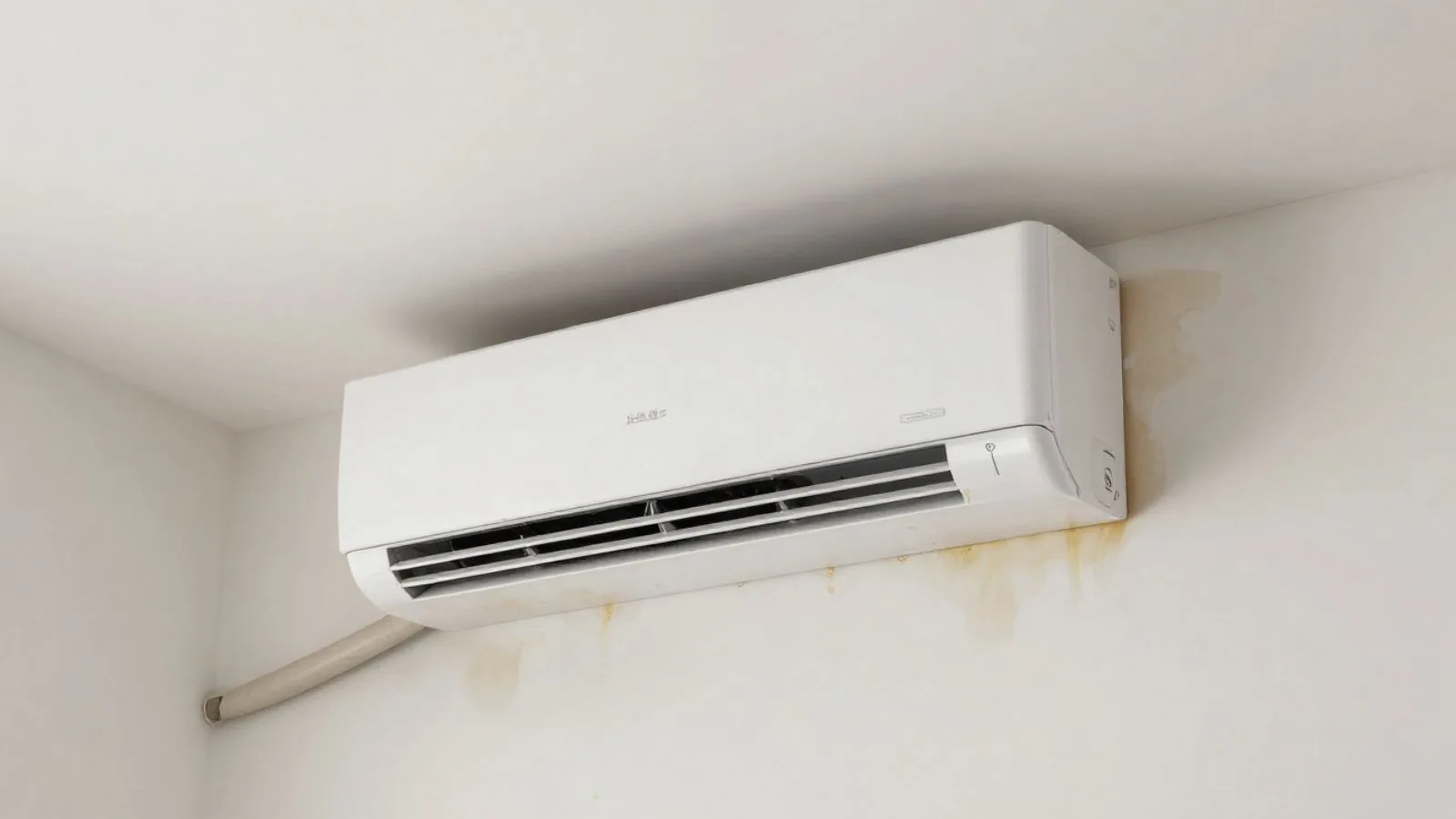
An air conditioner that leaks inside a Wellesley home usually does it through a clogged condensate drain, and AC leak water damage is the wetting of ceilings, closets, attics and walls around the system. The cooling coil pulls moisture from the air, collects it in a pan and sends it away through a drain line, so when that line clogs the pan overflows and water finds the nearest route into the house.
Turn the system off at the thermostat so it stops making more condensate.
This page covers the cleanup of the water, not the repair of the unit. An HVAC contractor clears the line, cleans the pan and checks the float switch, while the restoration crew dries what got wet. If the water stained a ceiling below the air handler, ceiling water damage repair covers that repair.
Where condensate water ends up
An air handler in an attic sends its drain through the ceiling below. A unit in a closet drains to the floor beside it. A ductless wall unit drains through a small tube that can disconnect or clog and leave rust-colored streaks down the wall. Each location has its own damage pattern, and the closet next to an air handler is a common place for carpet and baseboard to stay wet unnoticed.
- Water dripping from a ceiling vent or the ceiling below an attic unit.
- A closet floor or carpet that stays damp near the air handler.
- Rust colored streaks below a ductless unit or along its drain tube.
- A musty smell when the system runs, or standing water in the drain pan.
- The system shutting down on its own because a float switch tripped.
Why the damage is slow and sneaky
Condensate leaks start small and run whenever the system runs, which can mean for hours every day in warm weather. That repeated wetting soaks drywall, insulation and framing gradually. By the time a stain shows, the materials behind it may be saturated, so the crew uses a moisture meter and thermal camera to find the extent.
How the cleanup and drying proceed
The crew extracts any standing water, removes saturated insulation and drywall, and dries the framing with air movers and dehumidifiers until readings are dry. Mold is a particular concern with long-running condensate leaks because the water is constant and the space is warm. If growth is already present, the work moves to mold remediation before repairs close the wall.
| Unit location | Typical water path | What to check |
|---|---|---|
| Attic air handler | Overflow pan to the ceiling below | Ceiling drywall, attic insulation, joists |
| Closet air handler | Pan overflow to the floor beside | Carpet, pad, baseboard, wall base |
| Ductless wall unit | Disconnected or clogged drain tube | Wall surface, baseboard, floor below |
| Basement unit | Drain line clog or failed pump | Slab, stored items, wall bottoms |
Water still spreading? Call the 24/7 line
Describe what you see and what has been shut off. Scope and price are explained before work starts.
What AC leak damage repair depends on
Scope and price are explained before work starts. These factors change it.
- How long the system leaked, which is often weeks of daily wetting.
- Which materials were reached: ceiling drywall, insulation, carpet, flooring or framing.
- Whether mold has started and containment is needed.
- Access to the area, such as an attic or a tight closet.
- The drying days that the readings call for.
For your own estimate, call (833) 521-1033 and describe where the unit sits.
Insurance and documentation
Many policies treat a gradual leak differently from a sudden one, and long-running condensate damage may not be covered. Ask your insurer how your policy reads. Photograph the pan, the drain line and the damage, and keep the HVAC contractor's report with your records.
Frequently asked questions
What stops the water from coming back?
An HVAC contractor clears the drain, cleans the pan and checks the float switch. A cleaned line and a working shut-off switch prevent a repeat, and regular maintenance keeps the line clear.
Can I clear the drain line myself?
Some homeowners flush the line with a vinegar and water mix as maintenance. If the pan has overflowed or the line is blocked, have an HVAC contractor clear it and check the pan.
Is the water from my AC clean?
It is condensate, which is not drinking water and can carry mold and bacteria from the coil and pan. Treat it as water that needs prompt drying and cleaning, not as harmless clear water.
Why does my closet floor stay damp near the air handler?
The drain pan or line may be leaking a little with each cycle. Check the pan, the drain connection and the carpet edge.
When should I worry about mold?
If the area has been wet for more than a day or two or the smell does not clear after drying, ask the crew to check the cavity. Visible mold on drywall or framing is the trigger for remediation.
Water still spreading? Call the 24/7 line
Describe what you see and what has been shut off. Scope and price are explained before work starts.
Serving Wellesley and the towns around it
AC leak calls come from Wellesley, Natick, Dover, Weston and Wayland, mostly during the cooling season. Weston and the other nearby towns have their own pages for local detail.
Reference: the trade follows the ANSI/IICRC S500 standard for professional water damage restoration. Ask the dispatcher which parts apply to your job, and read the scope before work starts.