
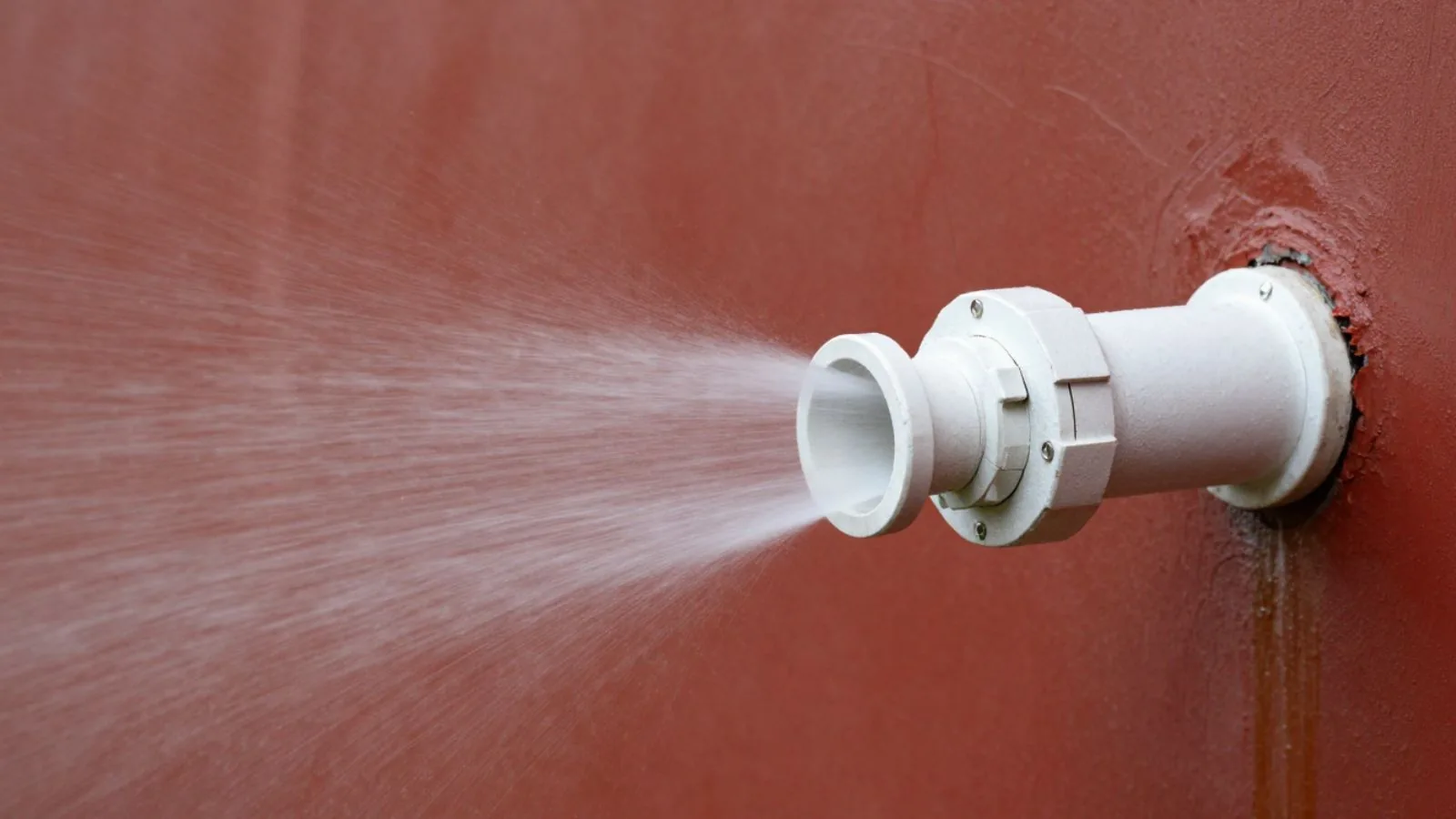
A frozen pipe that has split is an emergency the moment it thaws, and the Wellesley dispatch line is open 24/7 for it. Frozen pipe water damage happens when ice expands inside a supply line, cracks the pipe and then releases water as the line warms. If a pipe is frozen but not yet leaking, shut off the main water supply before you apply any heat, so a hidden crack cannot start flooding when the ice melts.
The source is cold, but the damage is ordinary water damage, and the cleanup follows the same path as a burst supply line. What is different here is the thaw timing, the places that freeze first and the way insurers read the cause.
A frozen pipe thaw is an emergency window
Ice can hold a split closed. The danger arrives when the temperature rises, the ice melts and a crack the length of a finger begins to spray inside a wall. People often leave for work after the pipes freeze and come home to a soaked floor, so a frozen line with no flow deserves attention before the thaw, not after it.
- Close the main water shut-off so a hidden split cannot release water when the ice melts.
- Open the faucet on the frozen line so melting ice and steam have somewhere to go.
- Thaw slowly with a hair dryer or heating pad. Never use an open flame or a torch, which can start a fire inside a wall.
- Look along the pipe for bulges, frost or wet spots, then check the ceiling or wall below.
- If water appears, keep the main closed and call (833) 521-1033.
Where pipes freeze in Massachusetts homes
The Massachusetts Division of Insurance advises homeowners to keep the house adequately heated in extreme cold, insulate pipes, shut off and cover outdoor faucets, and open cabinet doors under sinks so warm air reaches the pipes. Those tips match where freeze splits show up: exterior walls, unheated garages and crawl spaces, and runs under sinks on cold sides of the house.
Frozen pipe frequency is not something this page can put a number on for Wellesley. What the failure mechanism tells you is simple: a pipe that sits against an exposed exterior wall or in an unheated space is the first to freeze, so those are the runs to insulate and to check when a cold snap arrives.
Signs that a pipe has frozen or split
- A faucet that runs as a trickle or not at all while others work fine.
- Frost on an exposed pipe, or a pipe that feels colder than the pipes around it.
- A bulge in a pipe, a damp spot on a wall, or a stain that appears on a ceiling during a thaw.
- A sound of running water inside a wall when everything is turned off.
How the restoration works after a freeze split
After the main is off, the crew extracts standing water, then finds every wet material with a moisture meter and thermal camera. Water from a split often runs down the inside of an exterior wall, so insulation is checked first. Wet fiberglass is usually removed because it holds water against the sheathing, and drywall that has gone soft is cut out.
Drying then proceeds with air movers and dehumidifiers until readings return to a dry standard. Winter drying has its own challenge, since a house with open windows or a cold space dries slowly, so the team may control the temperature of the affected area to speed it up.
| Freeze location | What often gets wet | First check |
|---|---|---|
| Exterior wall run | Wall insulation and drywall | Moisture meter and thermal camera along the wall |
| Garage or unheated room | Slab, stored boxes, adjoining wall | Contents sorting and wall base readings |
| Under a sink on a cold wall | Cabinet floor and subfloor | Cabinet base moisture and flooring seams |
| Basement or crawl space ceiling | Joists, insulation, finished ceiling below | Ceiling readings in the room under the break |
Water still spreading? Call the 24/7 line
Describe what you see and what has been shut off. Scope and price are explained before work starts.
What a freeze split cleanup depends on
Scope and price are explained before work starts. These are the items that change it.
- How long the line ran after it thawed and how much water traveled.
- Whether the water stayed in a wall cavity or reached a finished ceiling below.
- The amount of insulation and drywall that cannot be dried and has to come out.
- The temperature of the space, which controls drying time in winter.
- How much finish work is needed after the structure is dry.
For your specific loss, call (833) 521-1033 and describe where the pipe froze.
Insurance and documentation
The Division of Insurance notes that most homeowners policies cover sudden and accidental water damage from a burst pipe only if the home was properly heated and not left unoccupied. Check your policy and ask your insurer about your situation. Photograph the frozen pipe and the damage, and keep the plumber's invoice and your moisture readings with the claim file.
Frequently asked questions
Is it safe to thaw a frozen pipe myself?
Yes, if you shut off the main first and use gentle heat such as a hair dryer or heating pad. Never use a torch or an open flame. If you cannot find the frozen section or the pipe is already leaking, stop and call a plumber.
Why did the leak show up after the temperature rose?
Ice can plug a crack. When it melts the pipe releases water under full pressure. That delay is why people often find the damage hours after the freeze.
How do I tell a frozen pipe from a pipe that has split?
A frozen line with a bulge, a hairline crack or a damp spot has probably split. A line that is only cold and silent may be frozen but intact. Either way, close the main before it thaws.
Will my home insurance cover freeze damage?
Many policies cover sudden and accidental pipe bursts when the home was heated and occupied, and many do not cover neglect. Your policy decides, so ask your insurer before you assume.
What should I do about the pipes in the garage or crawl space?
Insulate them, keep a small amount of heat in the space, and open the cabinet doors on cold exterior walls during a freeze. Pipe insulation and heat tape installed by a plumber lowers the risk further.
Do you handle frozen pipe water damage emergencies at night or on weekends in Wellesley?
Yes. Thaw leaks do not keep business hours, and the 24/7 line is answered at night, on weekends and on holidays. Shut off the main water first, then call (833) 521-1033.
Water still spreading? Call the 24/7 line
Describe what you see and what has been shut off. Scope and price are explained before work starts.
Serving Wellesley and the towns around it
Winter freeze calls reach us from Wellesley, Natick, Dover, Weston and Wayland. If the water has already reached a ceiling below the break, ceiling water damage repair covers the sagging drywall and stain.
Reference: the trade follows the ANSI/IICRC S500 standard for professional water damage restoration. Ask the dispatcher which parts apply to your job, and read the scope before work starts.