
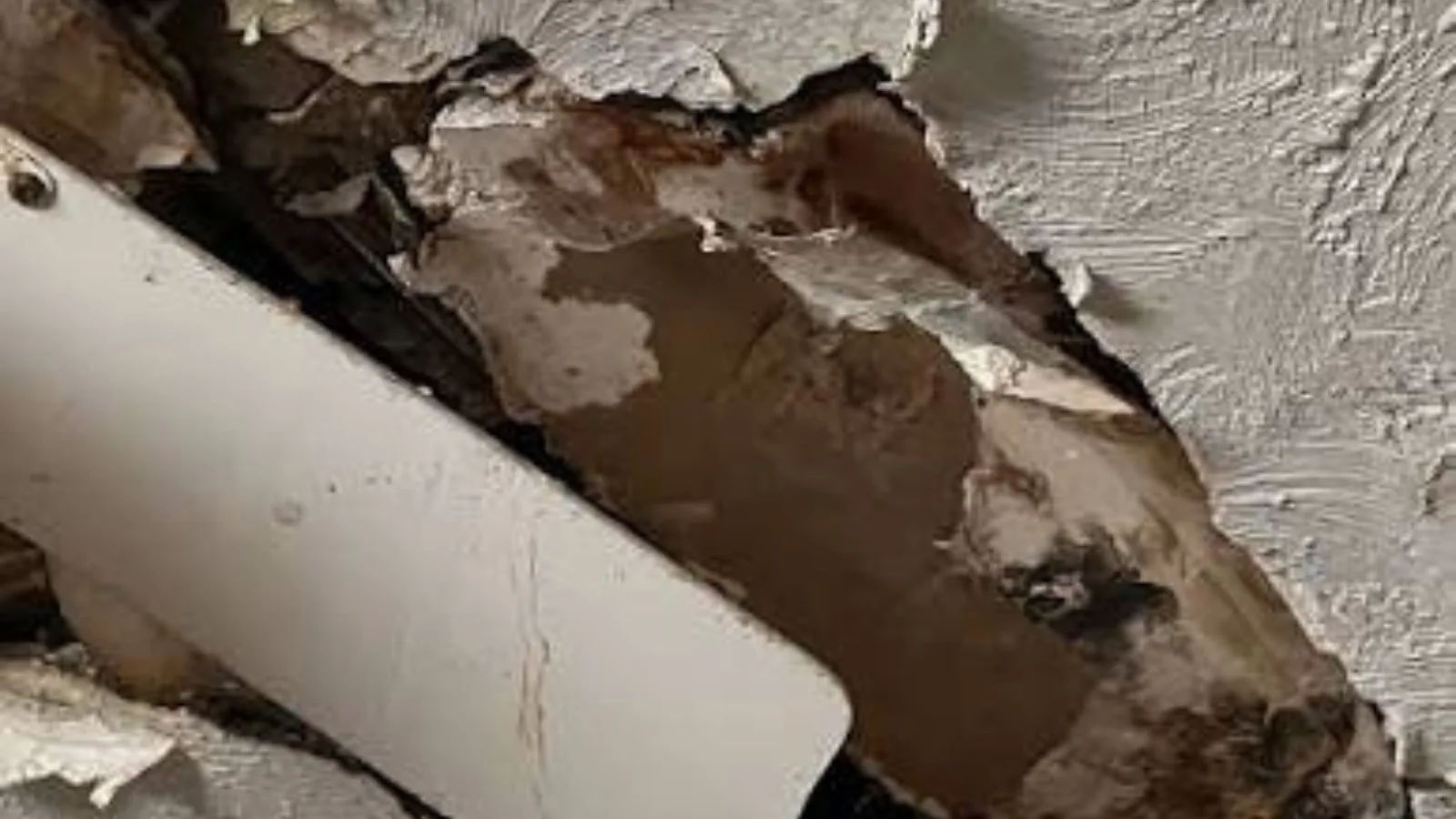
Wall and drywall water damage repair is the drying, removal and replacement of wall board, plaster, insulation and framing after water reaches a wall. Drywall is made of gypsum between paper faces, which absorb water and weaken, and a wall that looks mostly fine from the room can be soaked inside. Call (833) 521-1033 if a wall is stained, bubbling, soft or smells musty.
Ceilings and floors have their own pages, including ceiling water damage repair. The process of drying the cavity is explained in more detail under structural drying.
Signs water has reached a wall
- Brown or yellow stains, often with a ring at the edge.
- Paint that bubbles, peels or blisters.
- Soft or crumbling drywall at the base or around a switch.
- Baseboards or trim that cup or pull away.
- A musty smell, dark spots or a wall that feels cold and clammy.
Dry in place or cut it out
Drywall that was wet briefly with clean water can often be dried in place with cavity airflow, and readings confirm it. Drywall that stayed wet for a day or more, that is crumbling or that was soaked by contaminated water is cut out and replaced. Insulation inside a wet wall is usually removed because it holds water against the framing.
The crew cuts a clean line about a foot or so above the wet area, so the repair can be taped, finished and painted. Flood cuts like that also let the studs dry and let the crew check for mold on the back of the board.
What a wall repair involves
- Find the source and have it stopped.
- Map the wet area with a moisture meter and thermal camera.
- Remove wet board and insulation, or open the cavity for drying.
- Dry the studs and plates until readings reach a dry standard.
- Replace insulation and board, then tape, finish and paint.
| Wall condition | Likely action | Why |
|---|---|---|
| Slight stain, readings dry | Clean, seal and repaint | No water remains in the wall |
| Damp but intact board, clean water | Dry in place with cavity airflow | Board has not lost strength |
| Soft, crumbling or bubbling board | Cut out and replace | Gypsum has failed |
| Black or green growth | Containment and mold remediation | Mold needs controlled removal |
Water still spreading? Call the 24/7 line
Describe what you see and what has been shut off. Scope and price are explained before work starts.
What wall repair depends on
Scope and price are explained before work starts. The main factors are listed below.
- How many linear feet of wall are wet.
- Whether board and insulation are removed or dried.
- Finishes involved, such as paint, wallpaper, plaster or tile.
- Whether framing and subfloor are also wet.
- Drying days and repair steps.
For your own scope, call (833) 521-1033 and describe the wall.
What the finish stage looks like
After the wall is dry, the repair follows the same order as new construction. New insulation goes in, board is hung, seams are taped and finished, and the area is primed and painted. Stain-blocking primer matters where an old stain is being covered, and matching an aged paint color often means repainting the whole wall, not only the patch.
Baseboards, trim and wallpaper are handled at this stage as well. Wood trim that was soaked is usually dried and reused if it has not warped, while soft or swollen trim is replaced.
Mistakes that make wall damage worse
- Closing up a wall before readings show the framing is dry.
- Painting over a stain while the source is still active.
- Using a household heater to dry a wall, which can warp trim and crack plaster.
- Cutting into a wall without checking for wires and pipes first.
Insurance and documentation
Photograph the stain, the source and each stage of the repair. A sudden leak is often covered, while slow seepage and neglect often are not, so ask your insurer how your policy reads.
Frequently asked questions
Can I just paint over a water stain?
Paint hides the stain but not the moisture. If water is still in the wall, paint peels and mold can grow behind it. Find and dry the source first.
Why does the wall feel cold and damp?
Wet materials hold water and feel cool. A moisture meter reads how wet the wall actually is.
Do I have to remove the whole wall?
Usually not. A section above the wet line is cut out, and the rest is dried and checked.
What about plaster walls?
Older plaster and lath walls dry differently from drywall and can often be dried in place, but the crew checks readings and the condition of the plaster.
Is black growth on a wall dangerous?
It can be. Do not scrub it dry, which spreads spores. Call so it can be assessed and handled with containment if needed.
Water still spreading? Call the 24/7 line
Describe what you see and what has been shut off. Scope and price are explained before work starts.
Serving Wellesley and the towns around it
Wall repair calls reach us from Wellesley, Natick, Dover, Weston and Wayland. Many older Wellesley homes have plaster walls, and the Wellesley page describes them.
Reference: the trade follows the ANSI/IICRC S500 standard for professional water damage restoration. Ask the dispatcher which parts apply to your job, and read the scope before work starts.