
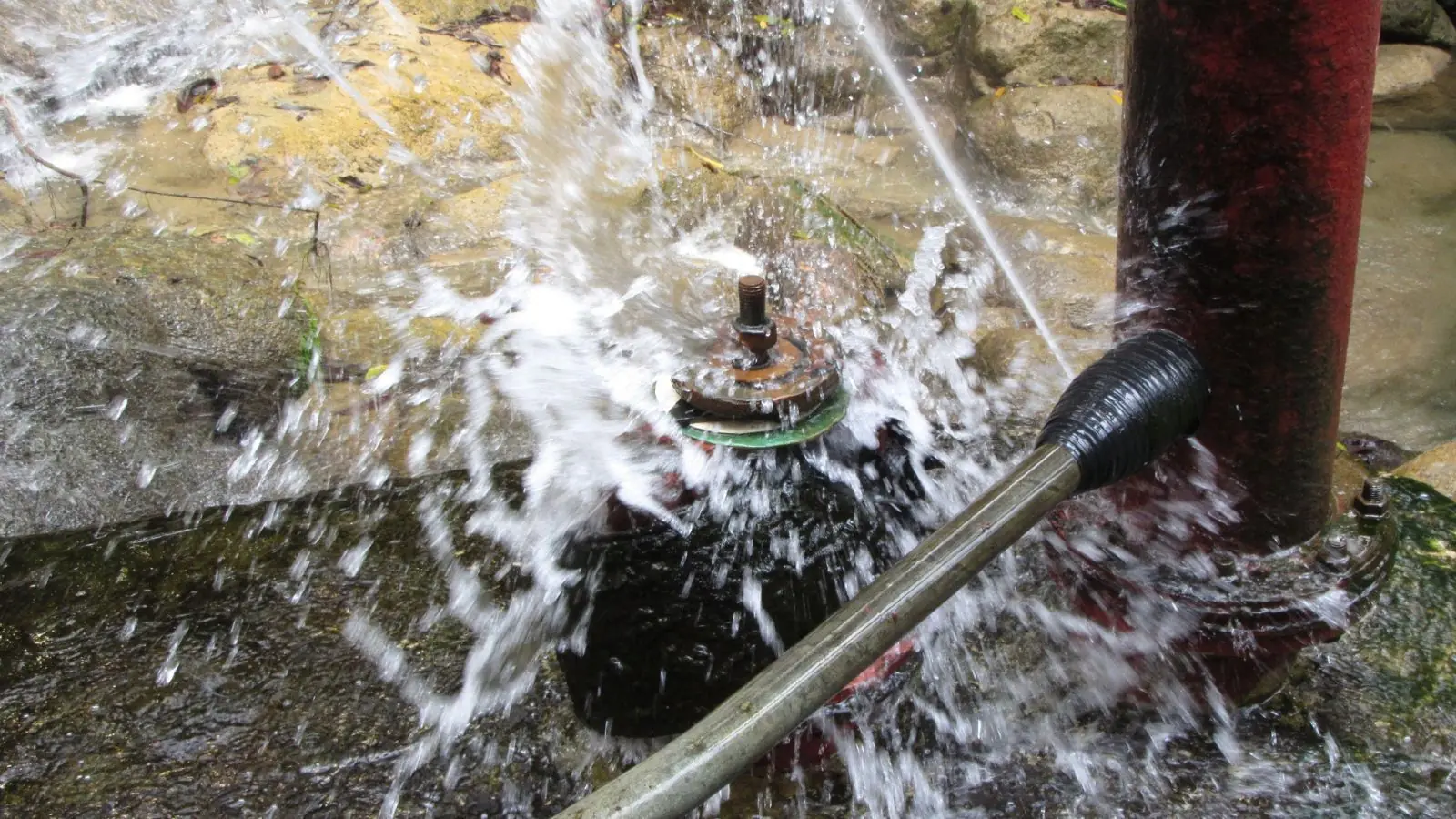
A burst pipe in a Wellesley home is an emergency, and our dispatch line is open 24/7 for it. Burst pipe water damage is the wetting of walls, floors and ceilings by a pressurized supply line that has split or come apart, and it differs from a slow drip because the water arrives fast. First, close the main water shut-off, then open a faucet on the bottom floor to drain the line, and keep people away from any wet outlets.
This page is about the pipe as the source. If the pipe has already emptied and the floor is covered, water extraction covers the pump-out. If the split happened inside a wall or above a kitchen, kitchen water damage and wall and drywall repair cover the materials that were hit.
Burst pipe emergency: the first ten minutes
- Find the main shut-off, usually where the water line enters the house near the meter, and turn it fully off.
- Open the bottom-floor faucet or hose bib to drain what remains in the line, which lowers the amount of water still coming out.
- If water is near the electrical panel or outlets and you cannot reach the breaker dry, stay out and call the utility or 911 first.
- Take photos of the break, the water line on the walls and anything damaged, then move small valuables to a dry floor.
- Call the dispatch line at (833) 521-1033 and tell the dispatcher what is wet and what has been shut off.
Where Wellesley pipes meet the town system
The Wellesley Department of Public Works Water and Sewer Division maintains about 150 miles of street mains and roughly 8,500 service lines, according to the town's 2024 water quality report. The town's job ends somewhere between the street main and your meter, and yours begins after that. Ask the DPW where your own line of responsibility starts so you know who to call when the failure is outside the foundation.
Water that arrives from the town's 10 wells and the Massachusetts Water Resources Authority is hard, with the same report listing hardness between 111 and 493 parts per million. Hard water leaves mineral scale in fittings and valves over the years, which is one reason an older shut-off valve may stick when you finally need it. Test the main valve and the fixture valves once a year so you are not learning how they work during a failure.
What burst pipe damage looks like
- Water spraying or streaming from a wall, ceiling or floor, or a sudden drop in water pressure.
- Ceiling stains or bubbling paint that appear within an hour below an upstairs bathroom or kitchen.
- Baseboards lifting, flooring that buckles, or a hollow, wet sound when you tap a wall.
- A meter that keeps turning with every fixture off, which points to a hidden line failure.
How the cleanup and drying work
The crew locates every wet material, not only the visible ones. Thermal imaging and moisture meters trace water through a wall cavity and under flooring, because a pipe that burst in a wall usually wets the insulation, the drywall on both sides and the sill plate below it.
Water is extracted, wet insulation and soft drywall are removed where they cannot be dried, and air movers and low-grain refrigerant dehumidifiers dry the rest while readings are logged. Plumbing repair itself is a licensed plumber's work and is not part of the restoration scope, so expect the plumber and the restoration team to work in sequence.
| Where the pipe split | Usual exposure | Typical drying approach |
|---|---|---|
| Inside a wall cavity | Insulation, both drywall faces, wall base | Open the cavity, dry with directed airflow, reinstall later |
| Above a finished ceiling | Ceiling drywall, insulation, light fixtures | Remove sagging drywall, dry joists, check fixtures for water |
| Under a sink or vanity | Cabinet base, floor, adjoining wall | Dry or replace cabinet floor, dry the subfloor |
| In a basement or unfinished area | Slab, stored items, wall bottoms | Extract, dry with dehumidification, sort contents |
Water still spreading? Call the 24/7 line
Describe what you see and what has been shut off. Scope and price are explained before work starts.
What a burst pipe cleanup depends on
Scope and price are explained before work starts. These factors usually set the size of the job.
- How long the water ran before it was shut off, and how many floors it reached.
- Whether the water stayed in one room or traveled through wall and ceiling cavities.
- The finishes involved, such as painted drywall, plaster, hardwood, carpet or tile.
- How many days of drying and how much equipment the readings call for.
- How much needs to be rebuilt once the structure is dry.
For a number tied to your house, call (833) 521-1033 and describe the break.
Insurance and documentation
Many homeowners policies cover sudden and accidental water damage from a pipe that suddenly bursts, but they often do not cover damage from a slow leak that went unnoticed or from neglected maintenance. Read your policy or ask your insurer how it treats your situation. Keep photos, moisture readings and the plumber's invoice together, since they document the cause and the repair.
Frequently asked questions
Where is my main water shut-off?
Most houses have it where the service line enters, often in the basement near the meter or in a utility closet. Find it before you need it and label it. Turn it clockwise on a gate valve, or a quarter turn on a ball valve.
Should I call a plumber or the restoration line first?
Shut off the water first. Then call both. The plumber repairs the pipe, and the restoration team removes the water and dries the structure, so the two jobs happen in sequence and neither replaces the other.
How soon does mold start after a burst pipe?
Mold needs moisture, and the Massachusetts Department of Public Health advises cleaning and drying wet areas within 24 to 48 hours to prevent mold growth. That is why extraction and drying start as soon as the line is shut off.
Do I have to open my walls?
Only where readings show water cannot be dried in place. Many walls can be dried through small openings at the base, while wet insulation and soft drywall are usually removed.
Can I just run fans and a dehumidifier from the hardware store?
Household equipment moves far less air and removes far less moisture than the equipment used on a restoration job, and it cannot reach inside a wall cavity. For anything beyond a small spill the readings tell the real story.
Do you handle burst pipe water damage emergencies at night or on weekends in Wellesley?
Yes. A burst pipe does not keep business hours, and the 24/7 line is answered at night, on weekends and on holidays. Shut off the main if it is safe, then call (833) 521-1033.
Water still spreading? Call the 24/7 line
Describe what you see and what has been shut off. Scope and price are explained before work starts.
Serving Wellesley and the towns around it
Burst pipe calls reach us from all of Wellesley as well as Natick, Dover, Weston and Wayland. When the freeze is the cause, frozen pipe water damage covers the thaw-specific steps and the cold-weather prevention advice.
Reference: the trade follows the ANSI/IICRC S500 standard for professional water damage restoration. Ask the dispatcher which parts apply to your job, and read the scope before work starts.