
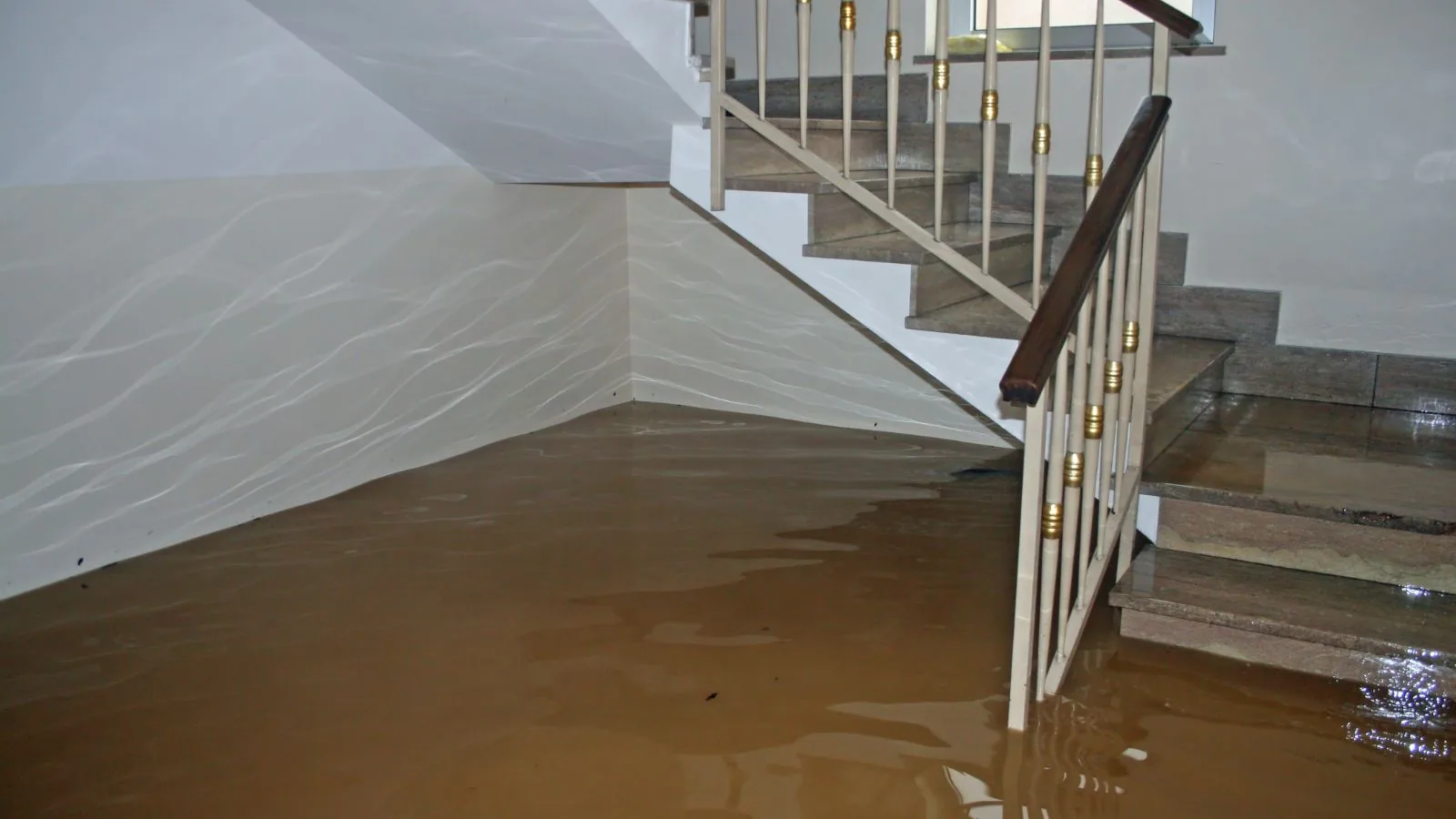
Floodwater in a Wellesley home is an emergency, and the dispatch line is open 24/7 for it. Flood damage restoration is the removal, drying and cleanup of a home after river, groundwater or surface water enters it, and the water is treated as contaminated because it has crossed soil, roads and drains. Keep people and pets out of the water, do not touch wet electrical equipment, and call before you try to clean up.
This page is about outside water that comes in. A pipe that failed inside the house is covered by burst pipe water damage, and wind or rain through a roof or wall is covered by storm water damage cleanup. A below-grade room has its own page at basement water damage cleanup.
When flooding is an emergency in your house
Floodwater is dangerous before it is damaging. It can carry sewage, fuel and bacteria, and it can energize an electrical panel that is partly submerged. Treat anything that came in from outside as Category 3 water under the ANSI/IICRC S500 water damage standard, which means porous materials that soaked in it are usually removed instead of dried.
Safety before cleanup
- Do not enter water where outlets, appliances or a panel are wet. Call the utility or 911 if you suspect an electrical or gas hazard.
- Do not use a household vacuum or fans to clear floodwater, and do not run a wet appliance.
- Wear boots, gloves and eye protection if you must enter, and keep children and pets out.
- Throw out food that touched the water, and do not wash flooded clothing with other laundry.
What Wellesley records show about flooding
The Charles River runs along the edge of Wellesley, and the town maps brooks and ponds across its neighborhoods, including Fuller Brook, Boulder Brook, Morses Pond and Lake Waban.
The National Weather Service recorded the Charles River at the Waltham gauge at 7.56 feet on March 16, 2010, a record for that gauge, and 14.87 inches of rain fell in Boston that March, a record for the month. The same NWS report says portions of Route 9 in Natick and Wellesley were shut down in mid-March.
None of that tells you whether your street floods. For that, look up your own address on the FEMA Flood Map Service Center. The Town of Wellesley states that its updated flood insurance rate maps took effect on July 8, 2025, and Town Hall can point you to the map panels. A property outside a mapped flood hazard area can still take on water from heavy rain, so the map is a starting point and not a promise.
How a flood cleanup proceeds
Floodwater cleanup runs in a fixed order. Safety checks come first, followed by extraction, removal of contaminated porous materials, cleaning and antimicrobial treatment of what stays, and then structural drying with air movers and dehumidifiers until moisture readings reach a dry standard.
The crew documents each stage with photos and readings. That record matters for insurance, because flood coverage usually has its own conditions and the paperwork shows what the water reached and when it was removed.
| Material that soaked in floodwater | Usual outcome | Why |
|---|---|---|
| Carpet and carpet pad | Removed | Porous, holds contaminants, cannot be cleaned reliably |
| Drywall and insulation | Removed below the water line and where wicked | Absorb water and take a long time to dry |
| Solid hardwood and subfloor | Case by case after readings | Can sometimes be dried, but not when contaminated |
| Concrete, tile and sealed hard surfaces | Cleaned, sanitized and dried | Non-porous or easily cleaned |
Water still spreading? Call the 24/7 line
Describe what you see and what has been shut off. Scope and price are explained before work starts.
What a flood cleanup depends on
Scope and price are explained before work starts. These are the biggest drivers.
- Water depth and how many rooms or levels it reached.
- How long the water sat, which sets how much has to be removed instead of dried.
- Contamination level and the protective steps it requires.
- The size and type of finishes that were soaked.
- Drying days and the equipment the readings require.
For your own scope, call (833) 521-1033 and describe what the water reached.
Insurance and flood coverage
The Massachusetts Division of Insurance states that standard homeowners, renters and condo policies do not cover water damage from flood, and that a separate flood policy or a limited flood endorsement is needed. Ask your insurer what your policy says and whether a sewer or drain backup endorsement was added. Photos, readings and a written scope help any claim, but the policy decides coverage.
Frequently asked questions
Is floodwater cleanup safe to do myself?
For a small amount of clean water, parts of it may be. Flood water that came from outside carries contaminants, and wet porous materials usually have to be removed. Protective gear and containment matter, so call before you start pulling walls.
Does my homeowners policy cover flood damage?
Standard homeowners policies do not cover flood, according to the Massachusetts Division of Insurance. A separate flood policy or an endorsement is required, so check what you have.
How do I find out whether my address is in a flood zone?
Search your address on the FEMA Flood Map Service Center or ask Wellesley Town Hall for the map panel. The maps took effect July 8, 2025. A location outside a mapped zone can still flood from heavy rain.
How long will drying take?
It depends on the materials and the water depth. The crew logs moisture readings daily and stops when they reach a dry standard, which is more reliable than a calendar estimate.
Can mold grow after a flood?
Yes, if wet materials stay wet. The state health department advises cleaning and drying within 24 to 48 hours, which is why extraction and drying start as early as safety allows.
Do you handle flood damage cleanup emergencies at night or on weekends in Wellesley?
Yes. Floods do not follow business hours, and the 24/7 line is answered at night, on weekends and on holidays. Stay out of any water near electricity and call (833) 521-1033.
Water still spreading? Call the 24/7 line
Describe what you see and what has been shut off. Scope and price are explained before work starts.
Serving Wellesley and the towns around it
Flood calls come from Wellesley neighborhoods along the Charles River and brooks as well as from Natick, Dover, Weston and Wayland. Water extraction describes the pump-out step in more detail.
Reference: the trade follows the ANSI/IICRC S500 standard for professional water damage restoration. Ask the dispatcher which parts apply to your job, and read the scope before work starts.