
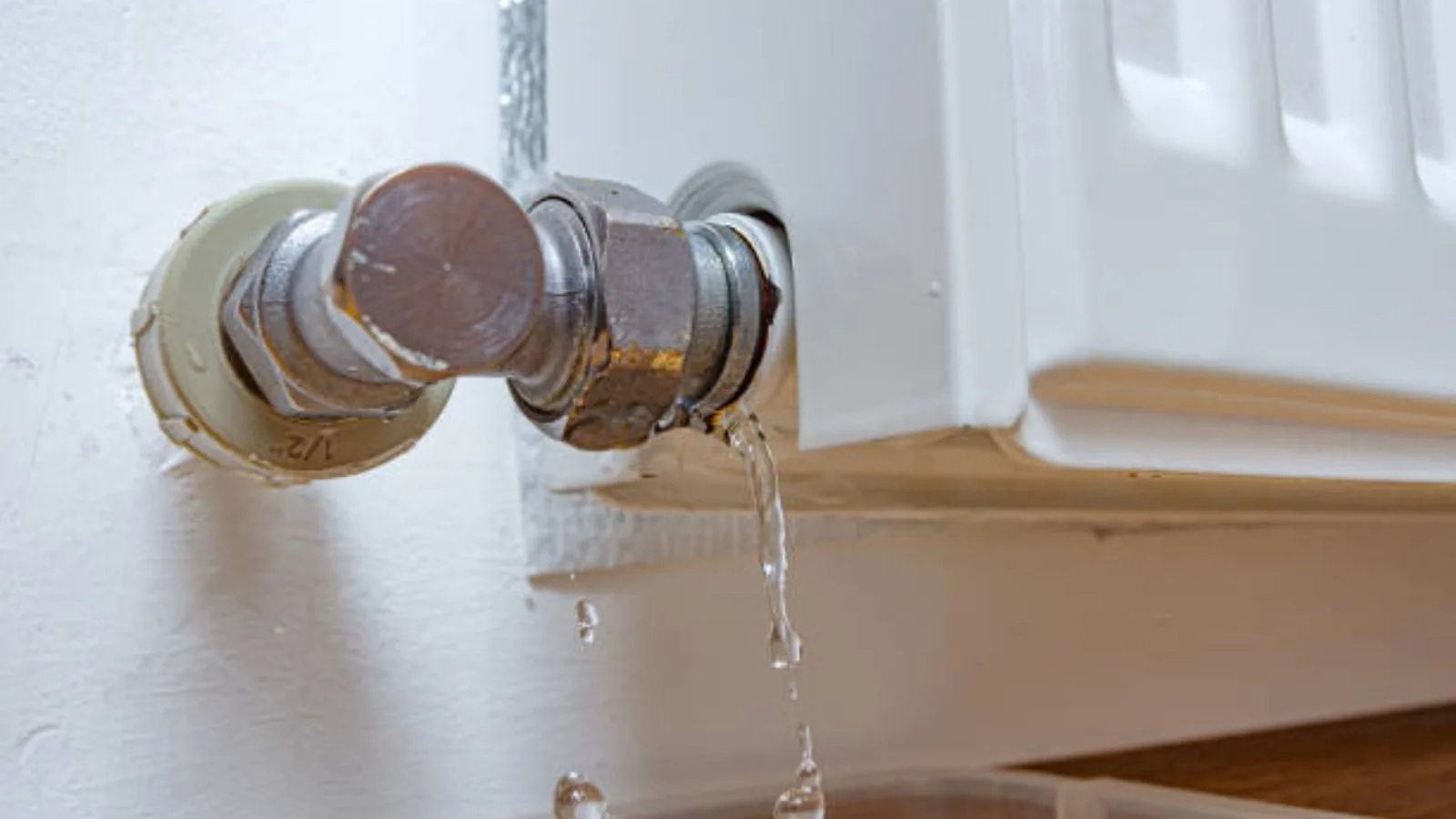
A leaking or failed water heater in a Wellesley home is an emergency, and the dispatch line is open 24/7 for it.
Water heater leak cleanup is the extraction and drying of the area around a tank that has split a seam, dripped from a fitting or released its contents at once. Turn off the electricity or gas to the heater, close the cold water supply valve above it, and keep out of the water until the power is confirmed off.
This page covers the cleanup after the tank. Replacing or repairing the heater belongs to a licensed plumber or heating contractor, and no restoration crew swaps a unit. A standard tank holds dozens of gallons, so even a clean failure spreads far across a finished basement, and basement water damage cleanup covers what follows below grade.
Water heater leak emergency: what to shut off
- Turn off the power at the breaker, or set a gas heater to pilot or off, so the elements are not running dry or heating a leaking tank.
- Close the cold water supply valve on the pipe above the heater. This stops the tank from refilling.
- If the tank is leaking from the pressure relief valve, treat the water as hot and stay clear.
- Open a hot water faucet upstairs to relieve pressure and help the tank drain slowly.
- Photograph the tank label, the leak and the water line, then call (833) 521-1033.
Why tanks fail and what hard water has to do with it
A glass-lined steel tank slowly corrodes from the inside and rust eventually breaches the lining. Mineral scale builds on the bottom of the tank and around fittings, which the heater works harder to push through. The Wellesley water quality report lists local hardness between 111 and 493 parts per million, so minerals in the tank are a normal part of maintenance here.
That is a general point and not a statement about your heater. The tank label gives the age, and the anode rod and flushing history tell the rest. A heater that is old, rusted around the base or weeping at a seam is worth replacing before it fails in the middle of the night.
What the cleanup covers
The crew extracts the water, removes baseboards where water has wicked behind them, and measures drywall, flooring and the bottom of stored boxes. Basements are common places for water heaters, and concrete floors dry well while the drywall above the slab wicks water upward. Insulation and drywall that are wet beyond a few inches are cut out so the cavity can dry.
Air movers and dehumidifiers run until moisture readings reach a dry standard. Sparse furniture and stored contents are moved so the floor and walls can be reached, and items that wicked water are sorted into keep, clean or discard.
| Failure type | Typical water volume | Area to check |
|---|---|---|
| Slow drip at a fitting | Small, repeated wetting | Base of the heater, wall behind, floor under it |
| Tank seam leak | Steady stream that grows | Whole room floor, baseboards, adjacent rooms |
| Full tank release | Dozens of gallons at once | Entire level, drains, stairs and rooms below |
| Relief valve discharge | Hot water spray | Ceiling and walls above, plus burn risk |
Water still spreading? Call the 24/7 line
Describe what you see and what has been shut off. Scope and price are explained before work starts.
What water heater cleanup depends on
Scope and price are explained before work starts. These are the usual factors.
- Whether the release was a slow leak or the full tank.
- Whether the room is finished or has stored contents on the floor.
- How far the water traveled into adjoining rooms or the level below.
- Flooring and drywall that must be removed instead of dried.
- Drying days, which depend on the structure and the equipment readings.
For your actual scope, call (833) 521-1033 and describe the heater and the room.
Insurance and documentation
Sudden water heater failures are often covered under homeowners policies as accidental discharge, while the heater itself and slow leaks from poor maintenance often are not. Ask your insurer how your policy reads. Keep the tank label photo and the replacement invoice with the claim file.
Frequently asked questions
Where is the shut-off for the water heater?
The cold water valve on the pipe above the tank closes the supply. The power or gas control is a separate switch or breaker. Turn off both before you touch the area.
Do you replace the water heater?
No. A licensed plumber or heating contractor replaces or repairs the unit. The restoration work covers the extraction and drying of the area around it.
Is a puddle under a water heater always a failed tank?
Not always. A loose fitting, a leaking relief valve or condensation can all leave a puddle. Water that keeps appearing after you wipe it up points to a leak that needs attention.
Will the water have damaged the drywall?
Often yes at the bottom. Drywall wicks water upward and the bottom few inches usually show the damage first. A moisture meter finds how far it went.
Can I keep using the room?
Wait until the power and gas are confirmed off and the readings are taken. Wet drywall and flooring can hide electrical and mold risks.
Do you handle water heater leak cleanup emergencies at night or on weekends in Wellesley?
Yes. A tank does not fail at convenient times, and the 24/7 line is answered at night, on weekends and on holidays. Turn off the power or gas and the cold supply, then call (833) 521-1033.
Water still spreading? Call the 24/7 line
Describe what you see and what has been shut off. Scope and price are explained before work starts.
Serving Wellesley and the towns around it
Water heater calls reach us from all of Wellesley as well as Natick, Dover, Weston and Wayland. When the water reached a finished lower level, carpet water damage restoration explains what happens to the carpet and pad.
Reference: the trade follows the ANSI/IICRC S500 standard for professional water damage restoration. Ask the dispatcher which parts apply to your job, and read the scope before work starts.