
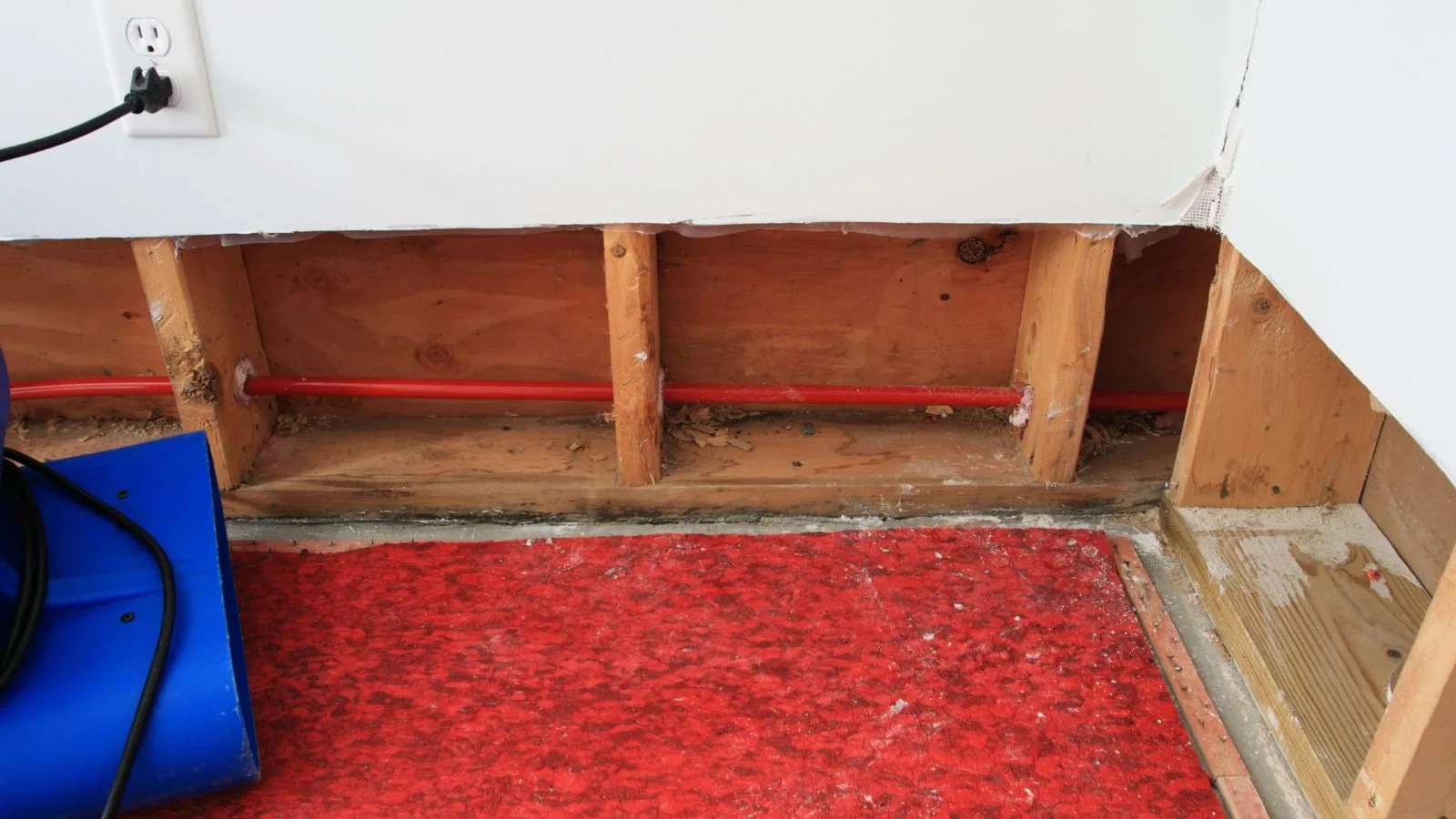
Carpet water damage restoration is the extraction, drying and, where needed, replacement of wet carpet and carpet pad. Carpet is the quickest part of a floor to soak and one of the easiest to save when the water was clean and the response was quick. Call (833) 521-1033 if carpet squishes underfoot, and tell the dispatcher where the water came from, since that decides what happens next.
Water volume is handled first by water extraction. Carpet in a below-grade room is often part of a basement water damage cleanup.
Can the carpet be saved?
The answer rests on the category of water and on time. Under the ANSI/IICRC S500 standard, clean supply-line water is Category 1, and carpet that has been wet by it can often be extracted and dried in place. Water that crossed a floor or carried soil is Category 2, and sewage or flood water is Category 3. Carpet and pad that were wet by Category 3 water are usually discarded because porous material cannot be reliably cleaned.
How wet carpet is handled
The crew extracts water from the carpet and pad with weighted tools, then lifts and floats the carpet to dry the pad and subfloor, or removes the pad if it is soaked. Pad is cheap and holds water like a sponge, so replacing it is usual. Air movers and dehumidifiers finish the drying, and readings confirm the subfloor is dry before the carpet is put back.
Stretching and re-installing the carpet is a repair step that follows once the structure is dry. Carpet that is left wet for days can grow mold and develop a lasting odor.
| Water source | Water category | Usual carpet result |
|---|---|---|
| Supply line or clean leak | Category 1 | Extract and dry in place, replace pad if soaked |
| Washing machine or dishwasher discharge | Category 2 | Treat or replace depending on time and contact |
| Sewage backup or flood water | Category 3 | Remove and discard carpet and pad |
| Clean water left for days | Becomes worse over time | Assess for mold, often replace |
Water still spreading? Call the 24/7 line
Describe what you see and what has been shut off. Scope and price are explained before work starts.
What carpet restoration depends on
Scope and price are explained before work starts. The main factors are listed here.
- The area of wet carpet and pad.
- Water category and how long it sat.
- Whether the subfloor needs drying or repair.
- Whether the carpet is saved, or removed and replaced.
- The drying days the readings call for.
For your own scope, call (833) 521-1033 and describe the room.
Carpet types and how they respond
Nylon and polyester carpets tolerate clean water better than wool or natural fibers, which can bleed color, shrink or stain when soaked. Looped and cut-pile carpets dry differently, and carpet glued to a slab behaves differently from carpet stretched over a pad on a wood subfloor. The crew checks the backing as well as the surface, since a delaminating backing means the carpet will not lie flat again.
Area rugs on top of wall-to-wall carpet are a common surprise. They trap water against the carpet below, so lift them as soon as it is safe and let dispatch know they were there.
What you can do before the crew arrives
- Lift furniture off wet carpet and put foil or plastic blocks under the legs of anything that has to stay.
- Remove loose rugs, shoes and boxes from the wet area.
- Open windows if the weather allows and run fans across the surface, but do not use a household vacuum on standing water.
- Do not walk on soaked carpet more than necessary, since it presses water into the pad and spreads dirt.
- Photograph the carpet, the source and the room before anything is moved.
Small steps like these protect the carpet while extraction is arranged. They do not replace measured drying, which is what keeps the pad and subfloor from growing mold.
Insurance and documentation
Photograph the wet carpet, the source and any damage before removal. Keep a sample of the carpet if you can, since your insurer may ask about material and age. Coverage depends on the cause and the policy, so ask your insurer.
Frequently asked questions
How fast does carpet need to be dried?
The sooner the better. The Massachusetts Department of Public Health advises drying wet materials within 24 to 48 hours to prevent mold.
Why is the pad usually replaced?
Pad absorbs water, dries slowly and is inexpensive to replace. Leaving wet pad under carpet invites mold and odor.
Can I use a carpet cleaner or wet vacuum?
A household wet vacuum removes some surface water, but it does not dry the pad or the subfloor. Professional extraction and drying are needed for a real soaking.
What if the carpet is glued to a concrete slab?
It is handled by lifting and removing the carpet and pad and drying the slab, or by replacing the carpet. The crew decides from readings.
Will the carpet smell after drying?
If it dried quickly, usually not. A lingering smell points to moisture left in the pad or subfloor, and further drying or removal resolves it.
Water still spreading? Call the 24/7 line
Describe what you see and what has been shut off. Scope and price are explained before work starts.
Serving Wellesley and the towns around it
Carpet calls reach us from Wellesley, Natick, Dover, Weston and Wayland. Weston has its own page with local detail.
Reference: the trade follows the ANSI/IICRC S500 standard for professional water damage restoration. Ask the dispatcher which parts apply to your job, and read the scope before work starts.