
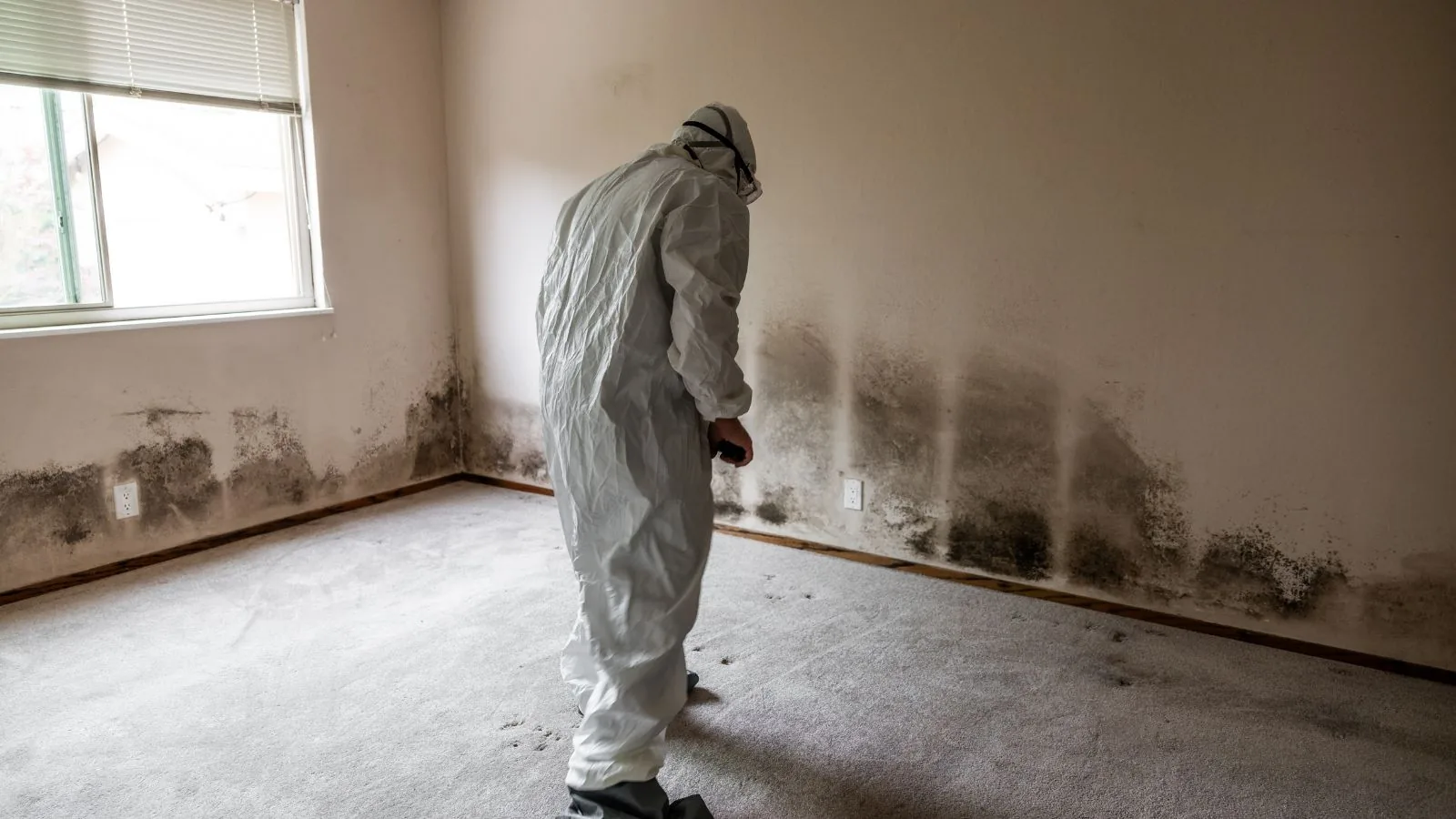
Mold remediation is the controlled removal of mold growth and the correction of the moisture that allowed it, carried out with containment so spores do not spread through the house. In a Wellesley home it nearly always follows water damage, whether from a leak, a flood, high humidity or a slow drip inside a wall. Call (833) 521-1033 if you see growth or smell something musty, and avoid disturbing it.
Drying the structure is the heart of prevention and is described under structural drying. Mold that follows a flood is often linked to flood damage cleanup.
A musty smell and a damp wall: what that means
A musty odor, a spot that returns after cleaning, a wall that feels clammy or a ceiling stain that keeps growing are signs of moisture, and moisture is what mold needs. The visible patch is often only part of the problem, since growth can sit behind drywall, under carpet or above ceiling tiles. Finding and correcting the water source comes before any cleanup, because mold returns if the moisture does.
What the health agencies say
The Massachusetts Department of Public Health advises cleaning and drying water-damaged areas within 24 to 48 hours to prevent mold growth, and says that porous materials that stay wet, such as carpet pad, ceiling tile and insulation, may have to be discarded. The department also notes that mold can trigger allergy and asthma symptoms in sensitive people. If anyone in the house has breathing problems, mention it on the call and talk to a doctor.
How a mold job works
- Assess the extent of growth and the moisture that caused it.
- Fix the water source, since remediation does not stop a leak.
- Set up containment with plastic barriers and negative air where the job calls for it.
- Remove affected porous materials and clean salvageable surfaces.
- Dry the structure and confirm moisture readings before rebuilding.
Containment matters. Scrubbing or sanding mold without it releases spores into the rest of the house, and household bleach does not remove growth from porous material. The goal is to remove the mold, not just to bleach its color.
| Situation | Common approach | Why |
|---|---|---|
| Small surface growth on a hard, nonporous surface | Clean and dry the surface | Growth sits on the surface only |
| Growth on drywall, ceiling tile or insulation | Remove and replace the material | Porous materials hold growth deep |
| Growth behind walls or under flooring | Open, contain, remove and dry | Source and extent are hidden |
| Recurring growth in one spot | Find the moisture source first | Cleaning alone will not stop it |
Water still spreading? Call the 24/7 line
Describe what you see and what has been shut off. Scope and price are explained before work starts.
What mold remediation depends on
Scope and price are explained before work starts. The main drivers are below.
- The area and the materials affected.
- How much containment and air filtration the job needs.
- The amount of removal and later rebuild.
- The moisture source and the drying days required.
- Whether testing is called for by a third party.
For your scope, call (833) 521-1033 and describe what you see.
What this page does not promise
Remediation removes growth and dries the structure. It cannot promise that mold will never return, because that depends on moisture control in the house. Air testing and clearance are performed by independent professionals when needed, and they are not offered here.
Insurance and documentation
Mold coverage varies and is often limited to mold that results from a covered water loss. Ask your insurer how your policy treats it, and photograph the growth and the source before anything is removed.
Frequently asked questions
Can I clean mold myself with bleach?
Bleach does not remove growth from porous materials and mixing it with other products is dangerous. Small surface spots may be cleaned, while larger or hidden growth needs professional handling.
How fast does mold grow after water damage?
The Massachusetts Department of Public Health advises drying within 24 to 48 hours to prevent growth, so the first two days matter.
Do you test the air for mold?
Remediation focuses on removal and drying. Independent testing and clearance are separate services and are not offered here.
Is mold always visible?
No. It can sit behind walls, under flooring or above ceilings. A musty smell and moisture readings are clues.
Will the mold come back?
It does if moisture returns. Fixing the water source and drying the structure are what prevent it.
Water still spreading? Call the 24/7 line
Describe what you see and what has been shut off. Scope and price are explained before work starts.
Serving Wellesley and the towns around it
Mold calls reach us from Wellesley, Natick, Dover, Weston and Wayland. Natick has its own page with local detail.
Reference: the trade follows the ANSI/IICRC S520 standard for mold remediation and the Massachusetts Department of Public Health mold guidance. Ask the dispatcher which parts apply to your job, and read the scope before work starts.