
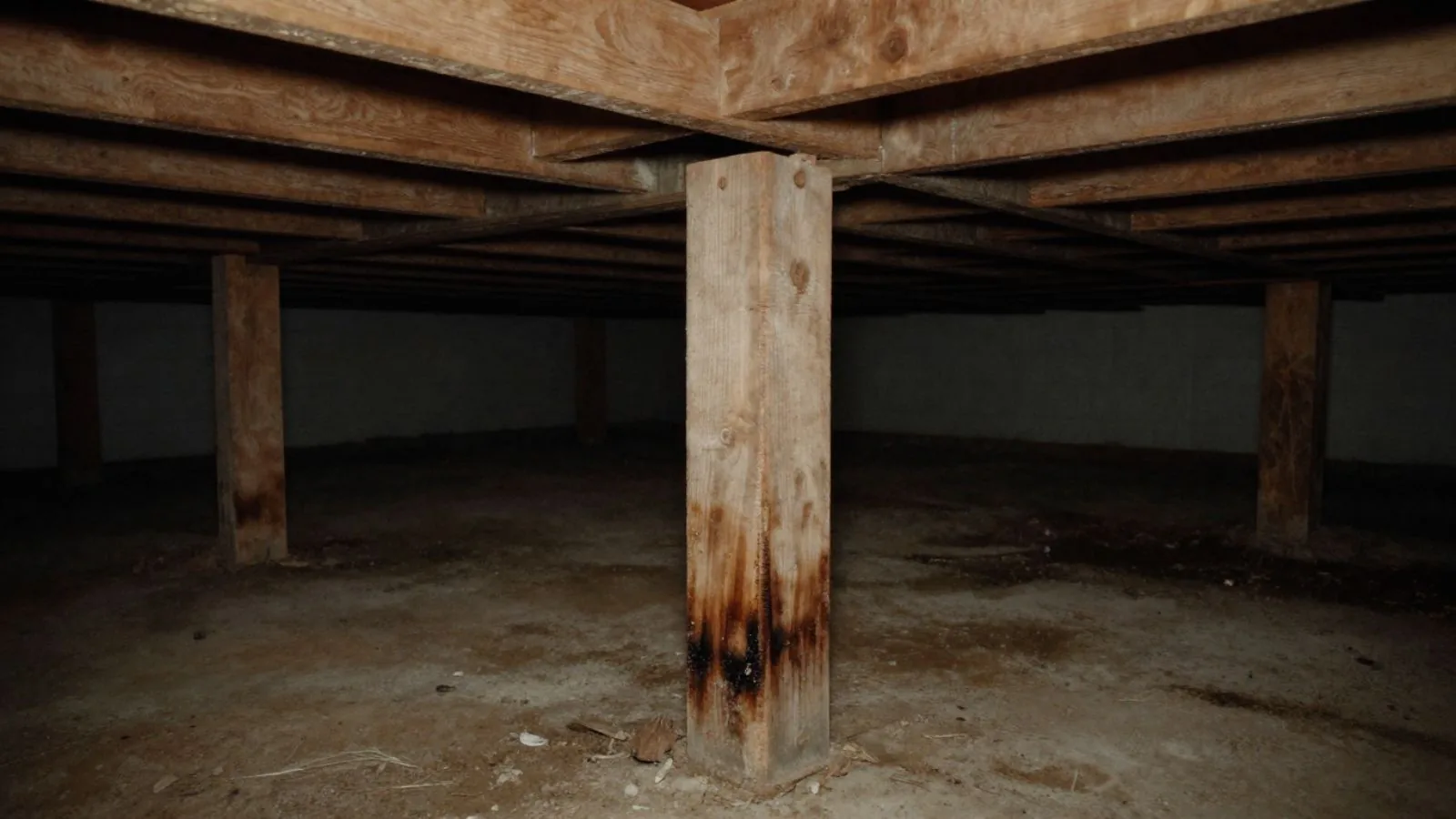
A crawl space with standing water, soaked insulation or a persistent musty smell needs attention, and crawl space water damage is the wetting of the joists, subfloor, insulation and soil surface in the shallow void under a house. The space is cramped, dark and poorly ventilated, which means water that enters it stays there and moisture drifts upward into the floors above. Call the 24/7 line at (833) 521-1033 and describe what you can see from the access hatch.
This page owns the under-floor void. A below-grade room with walls and a floor you can stand on is basement water damage cleanup, and a water line failing under a concrete slab is slab leak water damage.
What water does in a crawl space
Water in a crawl space comes from several directions. It enters through the foundation wall or floor after heavy rain, drips from a failed supply or drain line above, runs in from a gutter or grading problem, or condenses on cold ductwork and pipes. Whatever the source, it wets the soil surface, soaks fiberglass insulation that then falls away from the joists and raises the humidity of the whole space.
Signs to look for from the hatch
- Standing water or a muddy, glistening floor surface.
- Insulation that has sagged, fallen or turned dark.
- Dark staining or fuzzy growth on joists and the underside of the subfloor.
- Rusting nails, damp wood or a musty odor in the rooms above.
- Floors above that feel soft, cup or squeak more than they used to.
How the cleanup and drying work
The crew extracts any standing water with small pumps and hoses, removes wet insulation, vapor barrier fragments and debris, and measures the moisture in the joists and subfloor. Wet fiberglass is not salvageable because it sits against the wood and holds water there. Drying uses air movers and dehumidifiers placed through the access, with hoses run out for the water they collect.
A crawl space is also a place where mold can start early, since the wood is wet and the air is still. If growth is visible on the framing, mold remediation follows the water cleanup, with containment so spores do not travel upward.
| What you find | Likely source | Next step |
|---|---|---|
| Standing water after rain | Foundation seepage or grading | Extract, dry, and ask a contractor about drainage |
| Drip from above | Failed supply or drain line | Plumber for the line, then dry the joists |
| Damp insulation, no pooling | Humidity or condensation | Replace insulation, check ventilation and vapor control |
| Dark growth on framing | Long-term moisture | Containment and mold remediation before rebuilding |
Water still spreading? Call the 24/7 line
Describe what you see and what has been shut off. Scope and price are explained before work starts.
What crawl space cleanup depends on
Scope and price are explained before work starts. The main factors are below.
- Water depth and the size of the space.
- How much insulation, vapor barrier or debris has to be removed.
- Whether the framing shows mold or only moisture.
- Access, which can be a narrow hatch and low clearance.
- Drying days and the equipment readings call for.
For your scope, call (833) 521-1033 and describe the access and what you saw.
A note on what restoration is and is not
Restoration removes the water and dries the space. It does not repair a leaking foundation, regrade the yard or install drainage, and a contractor in those trades handles the cause. If you hear a promise that drying a crawl space prevents water from ever returning, be cautious, because only fixing the source does that.
Insurance and documentation
Coverage depends on the cause. Sudden pipe failures are often covered, while seepage and long-term moisture often are not, and flood damage needs separate flood coverage. Ask your insurer how your policy reads. Photos from the hatch and moisture readings help document the condition.
Frequently asked questions
Is a crawl space safe to enter myself?
The space is cramped and can hide wet wiring, sharp debris and mold. If the water is deep or anything electrical is wet, stay out and call. Peek in with a flashlight from the hatch instead.
Why is my crawl space musty when it looks dry?
Humidity and wet insulation can create a smell without standing water. Moisture meters and a look at the framing find out whether the wood is actually damp.
Do you waterproof crawl spaces?
No. Restoration removes the water and dries the space. Waterproofing, drainage and vapor control are separate trades that address the cause.
Should insulation be replaced?
Wet fiberglass usually should, because it holds water against the wood. Dry sections can often stay.
How soon can mold appear?
Mold needs moisture. The Massachusetts Department of Public Health advises drying wet areas within 24 to 48 hours to prevent growth, so call early.
Water still spreading? Call the 24/7 line
Describe what you see and what has been shut off. Scope and price are explained before work starts.
Serving Wellesley and the towns around it
Crawl space calls reach us from Wellesley, Natick, Dover, Weston and Wayland. Dover homes, many on private wells and septic, often have different water setups worth mentioning when you call.
Reference: the trade follows the ANSI/IICRC S500 standard for professional water damage restoration. Ask the dispatcher which parts apply to your job, and read the scope before work starts.