
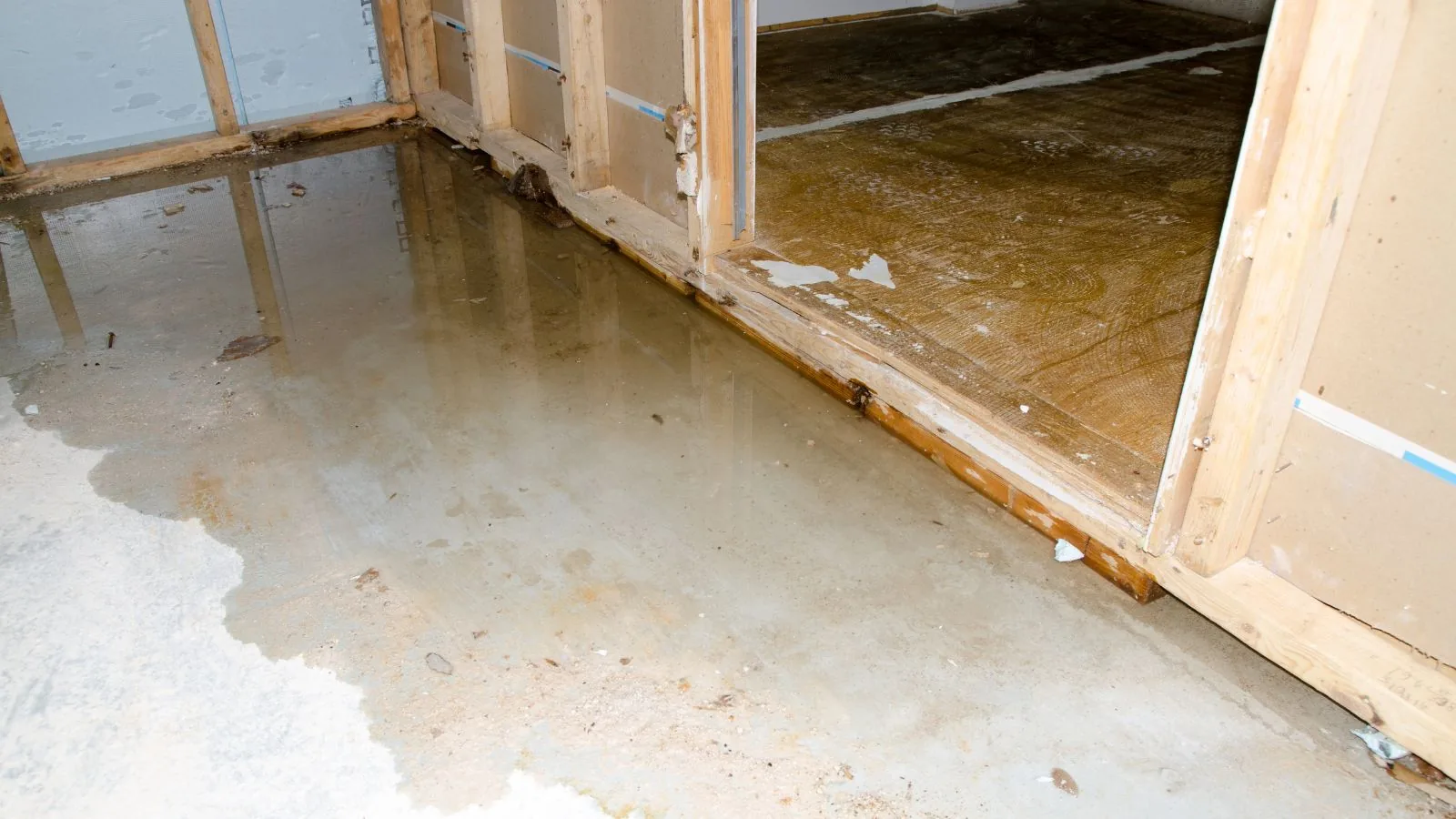
Water in a Wellesley basement is an emergency, and the dispatch line is open 24/7 for it. Basement water damage cleanup is the removal and drying of water, wet finishes and contents from a below-grade room after a leak, a failed sump pump, heavy rain or a burst pipe. Stay out of the water if outlets, the panel or appliances are in it, and call (833) 521-1033.
Standing water volume is covered by water extraction, and rising ground or river water is flood damage cleanup. A crawl space with no standing room is crawl space water damage.
Basement flooding emergency: first steps
Before you go down the stairs
- Look from the top step. If water is over outlets or near the panel, do not enter.
- Shut off power at the main breaker only if the panel is dry and you can reach it safely.
- Do not use a household vacuum or electronics in or near the water.
- Move valuables up and out only if the water is shallow and the power is off.
- Photograph the water line and the damage before moving things.
Where basement water comes from
Basement water enters from many directions. Groundwater rises through the floor or walls after heavy rain, a sump pump fails under load or a power outage, a supply line or water heater leaks, or a drain backs up. Window wells and bulkhead doors flood when rain overwhelms them, and a failed gutter or downspout can drive water against the foundation.
What the Wellesley record shows
The Town of Wellesley's flood page describes the 100-year floodplain mapped along the Charles River and Fuller Brook, with floodplain district rules in the town's zoning. The National Weather Service reports that heavy March 2010 rains closed portions of Route 9 in Wellesley and Natick. That was a regional event, but it shows why finished lower levels near streams and low ground are at risk when the water table rises.
How basement cleanup works
The crew extracts the water, removes wet carpet, pad, lower drywall and insulation, and sorts the contents into items that can be dried and items that cannot. Concrete floors and masonry walls are dried with dehumidifiers and air movers, and readings guide the end of the job.
Below-grade rooms are slow to dry because the surrounding soil can keep supplying moisture. If the walls stay damp after cleanup, the cause is outside the room, and a contractor in waterproofing or drainage fixes it. Restoration does not install drainage.
| Basement finish | Typical result after flooding | Handling |
|---|---|---|
| Unfinished concrete | Dries well | Extract, clean and dry with dehumidifiers |
| Carpet and pad | Wet and often contaminated | Remove, or dry if clean-water and caught early |
| Drywall and insulation | Wicks water upward | Cut out wet sections and dry the studs |
| Stored boxes and furniture | Soaked and moldy if left | Move up, sort and dry or discard |
Water still spreading? Call the 24/7 line
Describe what you see and what has been shut off. Scope and price are explained before work starts.
What basement cleanup depends on
Scope and price are explained before work starts. The main drivers are below.
- Water depth and the area of the room.
- Finished or unfinished space, and how much must be removed.
- Clean-water, gray-water or contaminated source.
- Contents handling and storage.
- Drying days required to reach dry readings.
For your basement, call (833) 521-1033 and describe what you see.
Insurance and flood coverage
The Massachusetts Division of Insurance explains that standard homeowners policies do not cover flood damage and that flood insurance is a separate policy. Sudden pipe failures and sump pump overflows may be covered if you have the endorsement. Check your policy and ask your insurer how your loss is classified.
Frequently asked questions
Is it safe to go into a flooded basement?
Not if water is near outlets, the panel or appliances. Look from the top step and call. Electrical hazards in water are serious.
Do you pump out basements at night?
Yes. The 24/7 line is answered at night, on weekends and on holidays. Tell dispatch the depth and the source.
Will my sump pump keep the basement dry?
Only if it has power and works. A pump that fails or is overwhelmed is a common cause of flooding, so check it and ask a plumber about backup power.
Why is the basement still damp after pumping?
Concrete and soil hold water. Dehumidifiers and time are needed, and persistent dampness points to a drainage cause outside the room.
Will homeowners insurance pay for a flooded basement?
It depends on the cause. Flood is excluded from standard policies, while some pump and pipe failures are covered. Ask your insurer.
Do you handle basement water damage emergencies at night or on weekends in Wellesley?
Yes. Basement water does not follow business hours, and the 24/7 line is answered at night, on weekends and on holidays. Stay out of the water if power is involved and call (833) 521-1033.
Water still spreading? Call the 24/7 line
Describe what you see and what has been shut off. Scope and price are explained before work starts.
Serving Wellesley and the towns around it
Basement calls reach us from Wellesley, Natick, Dover, Weston and Wayland. Wellesley has many homes near the Charles River and Fuller Brook, and its page covers the local detail.
Reference: the trade follows the ANSI/IICRC S500 standard for professional water damage restoration. Ask the dispatcher which parts apply to your job, and read the scope before work starts.