
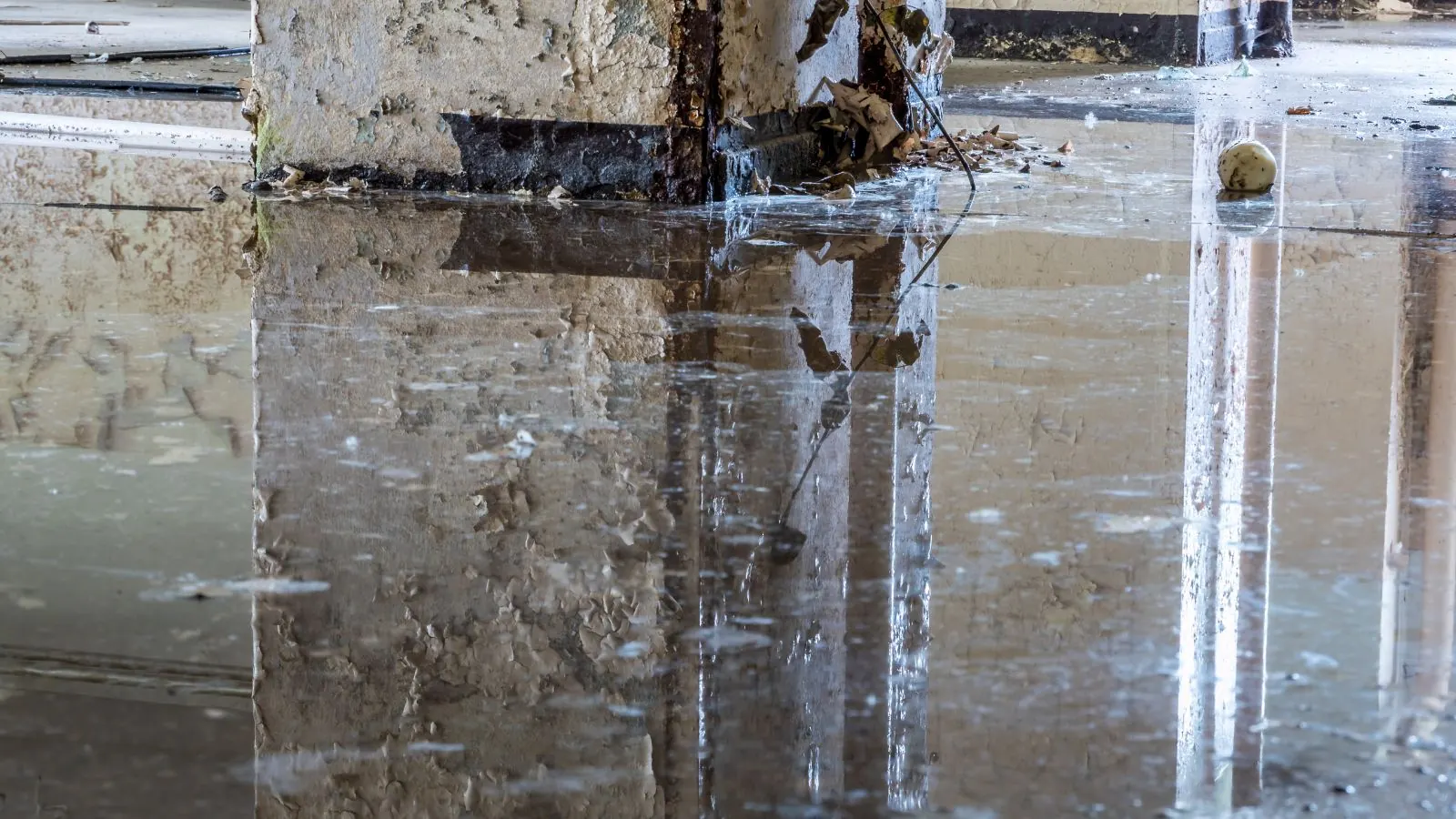
Standing water in a Wellesley home is an emergency, and the dispatch line is open 24/7 for it. Water extraction is the removal of standing and pooled water from floors and the structure with pumps and extraction units, and it has to happen before any drying can begin. While you wait for the crew, stop the source if it is safe to reach, keep people and pets out of the water, and lift valuables off the floor.
This page covers water that is sitting on a floor right now. If the water is still arriving from a split line, burst pipe cleanup covers the source and the shut-off steps. If it rose from the ground or came in with a storm, flood damage cleanup covers the contamination questions that come with outside water.
When standing water is an emergency
Water that is deeper than a puddle behaves differently from a spill. It soaks into baseboards, carpet pad and the bottom of wall cavities within hours, and the longer it sits the more material has to be removed instead of dried. A few inches across a finished basement can hold hundreds of gallons, which is far more than a mop or a household wet vacuum can lift.
Electricity is the first safety question. Do not wade into water that touches outlets, appliances or a panel. If you can reach the main breaker without standing in water, turn off power to the wet area. If you cannot, stay out and call the utility or 911 before you call the restoration line.
Stop the source
Close the fixture valve or the main water shut-off if you can reach it dry.
Protect people
Keep children and pets out. Treat any water that came from a drain as contaminated.
Lift what you can
Move small furniture, rugs and electronics up onto dry surfaces. Do not carry heavy items through water.
Take photos
Photograph the water line and the damaged items before anything moves. Your insurer will ask for them.
How extraction is done
The method follows the depth. Deep water is pumped out with submersible pumps and discharge hose. Shallow water over a hard floor is pulled with a truck-mounted or portable extraction unit that works like a very powerful wet vacuum. Carpet is extracted with a wand that draws water up out of the fibers and, where the pad is soaked, from underneath once the pad is lifted.
Extraction is measured, not guessed. After the standing water is gone the team reads moisture in the floor, baseboards and the lower wall with a meter, because a floor that looks dry can still hold water in the subfloor. Those readings decide whether materials can be dried in place or have to be cut out, and they become the starting numbers for structural drying and dehumidification.
| Situation | Typical method | What comes next |
|---|---|---|
| Several inches of clear water across a room | Submersible pump, then extraction unit | Moisture readings, then air movers and dehumidifiers |
| Soaked carpet and pad | Extraction wand, pad removal if saturated | Carpet drying or removal, see carpet water damage |
| Water over hardwood | Surface extraction, gentle drying set-up | Floor drying, see hardwood floor repair |
| Water that came up a floor drain | Extraction with protective gear, sanitizing | Handled as contaminated, see sewage backup cleanup |
What Wellesley weather adds
Wellesley sits along the Charles River watershed, and heavy rain can fill basements even when your own plumbing is sound.
The National Weather Service reports that Boston recorded 14.87 inches of rain in March 2010, a record for March, and that portions of Route 9 in Natick and Wellesley were shut down during the mid-March flooding. The practical lesson is that multi-day rain turns a sump pump failure or a power outage into standing water quickly, so check the pump before a forecast storm.
If the water seems to be coming from the street or from a town main, call the Wellesley Department of Public Works after-hours line listed on the town's Water and Sewer Division page. DPW handles the town side of the system, and the restoration crew handles what is inside your walls and floors.
Water still spreading? Call the 24/7 line
Describe what you see and what has been shut off. Scope and price are explained before work starts.
What shapes the price of an extraction job
Every job is different, and scope and price are explained before work starts. These are the factors that move the number.
- How much water there is, in depth and square footage, and how many levels it reached.
- The water category. Clean supply water, grey water and sewage are handled differently.
- What the water touched: carpet and pad, hardwood, drywall, insulation or stored contents.
- How long it sat before extraction, which affects how much material can still be dried.
- Access and hours, such as a finished basement with a narrow stairway.
To get a real number for your property, call (833) 521-1033 and describe what you see.
Insurance and documentation
Sudden and accidental water damage is often covered by a homeowners policy, while slow leaks and neglect often are not, and flood damage usually needs separate flood coverage. Check your policy or ask your insurer before you assume either way. Photos of the water line, a written scope and moisture readings help document the loss for your claim.
Frequently asked questions
How much notice do you need before someone can look at the water?
None. Call the dispatch line at any hour and describe the water. The dispatcher explains the plan and the scope and price before work starts. Arrival depends on the weather, the distance and the number of calls, so ask the dispatcher about timing when you call.
Can I extract the water myself with a shop vacuum?
For a small spill of clean water, yes. For anything deeper than a thin layer, or any water that came from a drain, the volume and the contamination make a household vacuum the wrong tool. Wet vacuums also should not be used around standing water near outlets.
Do you pump water out of a yard, a pool or the area outside the house?
No. Exterior pumping is a different trade. The work here is water inside the home and the drying that follows it, so a yard or pool problem is usually handled by an excavation or pumping contractor.
Does extraction finish the job?
No, it starts it. Floors, wall bottoms and the subfloor stay wet after the standing water is gone, so air movers, dehumidifiers and moisture readings follow until the materials reach a dry standard.
What should I tell the dispatcher on the first call?
Where the water is, how deep it is, whether it came from a clean source or a drain, what has been shut off and whether any electrical equipment is wet. Those answers shape the equipment that goes on the truck.
Do you handle water extraction emergencies at night or on weekends in Wellesley?
Yes. The 24/7 line is answered at night, on weekends and on holidays, and standing water does not wait for business hours. Call (833) 521-1033 and the dispatcher takes the details and explains the plan.
Water still spreading? Call the 24/7 line
Describe what you see and what has been shut off. Scope and price are explained before work starts.
Serving Wellesley and the towns around it
Extraction calls come from across the service area, including Natick, Dover, Weston and Wayland as well as every Wellesley neighborhood, and the process is the same in each. If water is also coming through a ceiling above, ceiling water damage repair covers that side of the loss.
Reference: the trade follows the ANSI/IICRC S500 standard for professional water damage restoration. Ask the dispatcher which parts apply to your job, and read the scope before work starts.