
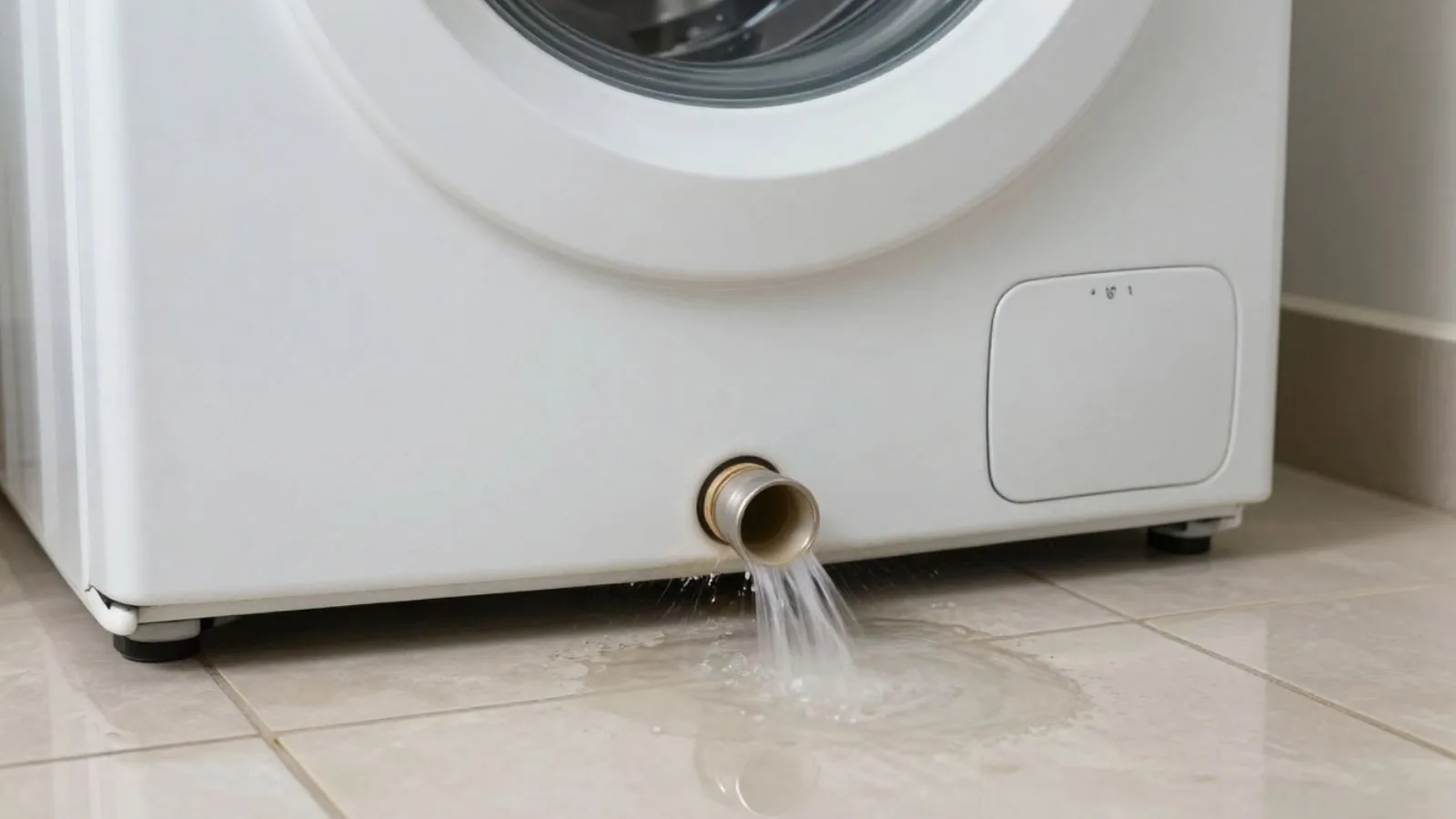
An appliance leak in a Wellesley home can become an emergency within minutes, and the dispatch line is open 24/7 for it. Appliance leak water damage is the wetting of floors and cabinetry from a washing machine, dishwasher, refrigerator ice maker or similar fixture that has failed. Unplug the appliance, close its supply valve and keep the floor around it clear of anyone who could slip or touch wet electrical parts.
This page owns the appliance as the source. The kitchen cabinets, sink area and counters are covered separately at kitchen water damage restoration, and a leak from a toilet or tub drain above is closer to ceiling water damage repair.
Appliance leak emergency: stop the supply
- Unplug the appliance or turn off its breaker if the floor is dry where you stand.
- Close the supply valve behind or beside it, which is usually a small quarter-turn valve on the wall.
- If the machine is a washer, pull it away carefully, since a full drum can hold water.
- Take photos of the hose, valve and floor before you move anything.
- Call (833) 521-1033 and tell the dispatcher which appliance failed and how long it ran.
The usual suspects
Washing machine supply hoses fail at the fittings or burst under pressure, and a drain hose that slips out of its standpipe can discharge each cycle. Dishwasher door gaskets, inlet valves and drain connections leak slowly under the unit. Refrigerator ice maker lines are thin tubes that crack or pull off behind the unit where nobody looks.
Mineral scale from hard water collects in valves and screens over the years. The Wellesley water quality report shows local hardness between 111 and 493 parts per million, so a valve that has not been turned in a decade may be stuck when you need it. Turn each appliance valve occasionally and replace aging rubber hoses with braided steel lines.
How a slow appliance leak damages a house
A slow leak is quieter than a burst and often more costly, because it runs for days before anyone notices. Water soaks the subfloor under a dishwasher, travels along the joists and shows up on the ceiling below or in a cabinet base. By the time a stain appears the material above it has usually been wet for a long time.
That is why a moisture meter and thermal camera matter. They find water that has moved sideways, so the crew dries the actual wet area instead of the visible spot only.
| Appliance | Common failure | What gets wet first |
|---|---|---|
| Washing machine | Supply hose burst or drain hose out of standpipe | Laundry room floor, wall base, room below |
| Dishwasher | Door gasket, inlet valve or drain connection | Kitchen floor under and beside, cabinet base |
| Refrigerator or ice maker | Cracked or loose water line | Floor behind and under, adjoining wall |
| Utility sink or wet bar | Faucet supply or drain fitting | Cabinet base and subfloor |
Water still spreading? Call the 24/7 line
Describe what you see and what has been shut off. Scope and price are explained before work starts.
What appliance leak cleanup depends on
Scope and price are explained before work starts. The main factors are below.
- How long the appliance leaked before it was noticed.
- The flooring type, such as sheet vinyl, tile, hardwood or laminate over wood.
- Whether the water traveled into a cabinet base or through the floor to a room below.
- Drying days and equipment, which depend on the readings.
- How much finish work is needed after the area is dry.
To price your loss, call (833) 521-1033 and describe the appliance and the room.
Insurance and documentation
Sudden and accidental discharge from an appliance is often covered, while a leak that was ignored for a long time often is not. Check your policy or ask your insurer. Keep the appliance model and age, photos of the failed part and your moisture readings together.
Frequently asked questions
How do I know which valve controls the appliance?
Most washers and dishwashers have a small shut-off valve on the wall or under the sink. If you cannot find it, close the main water supply instead and call a plumber to install a proper valve.
Can a leak from a dishwasher damage the floor?
Yes. Water pools under the unit, soaks the subfloor and can reach the ceiling below. Hardwood and laminate can cup or swell when a slow leak runs for days.
Do I need a plumber or a restoration crew?
Usually both. A plumber or appliance technician repairs the failed part, and the restoration crew dries the water that escaped.
Is a braided steel hose really better?
Braided steel hoses resist bursting better than rubber ones, though they are not permanent. Replace any hose that shows bulging, rust at the fittings or age.
What if the leak has run for several days?
Call as soon as you notice it. The longer materials stay wet, the more of them have to be removed instead of dried, and mold becomes a concern after 24 to 48 hours.
Do you handle appliance leak water damage emergencies at night or on weekends in Wellesley?
Yes. A failed hose does not wait for business hours, and the 24/7 line is answered at night, on weekends and on holidays. Close the supply valve, then call (833) 521-1033.
Water still spreading? Call the 24/7 line
Describe what you see and what has been shut off. Scope and price are explained before work starts.
Serving Wellesley and the towns around it
Appliance leak calls reach us from Wellesley and from Natick, Dover, Weston and Wayland. If a leak under a sink reached the cabinets, kitchen water damage restoration is the next page to read.
Reference: the trade follows the ANSI/IICRC S500 standard for professional water damage restoration. Ask the dispatcher which parts apply to your job, and read the scope before work starts.