
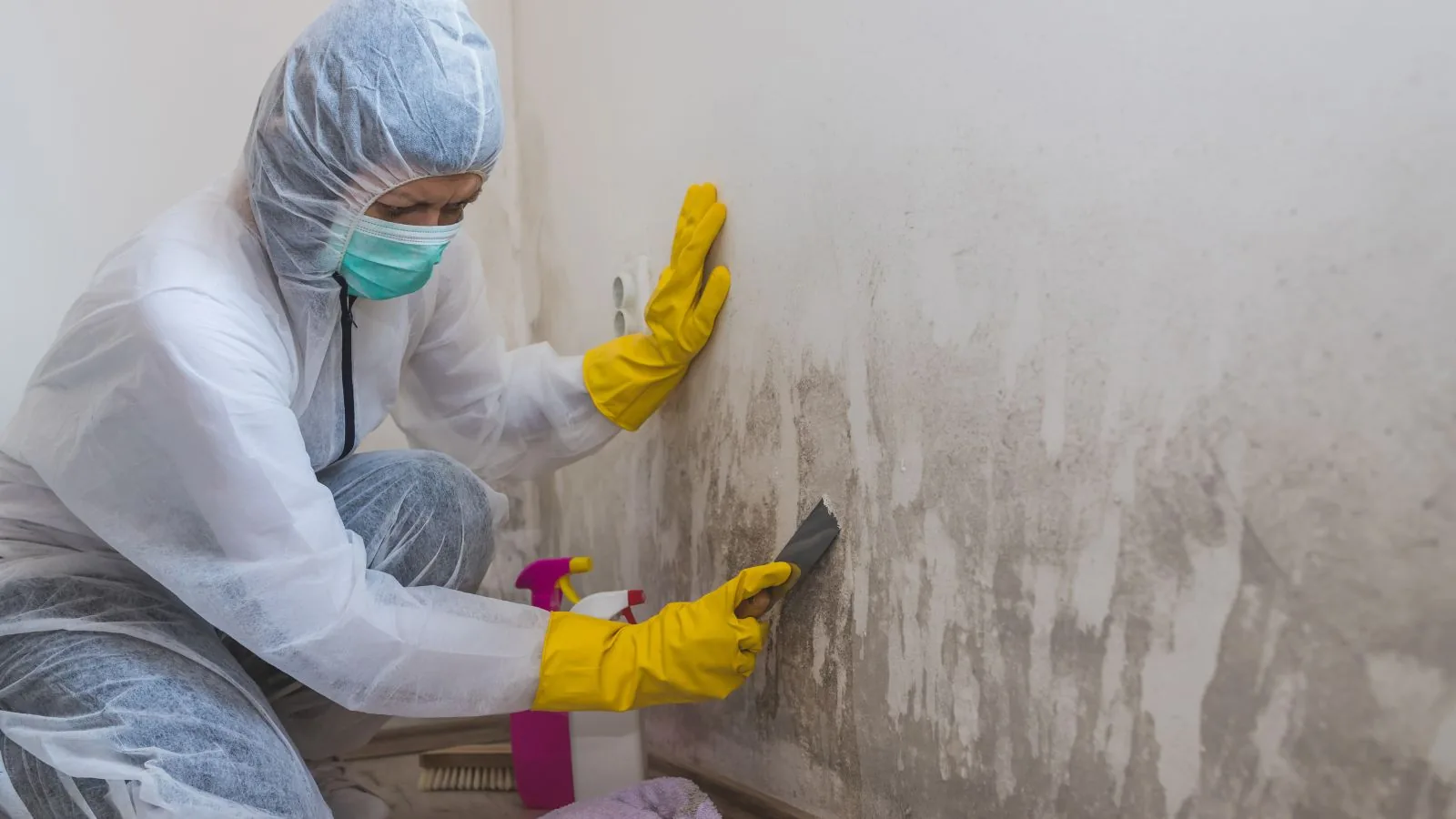
Black mold removal services range from a careful, contained job to a quick spray and a coat of paint. Knowing what a real job involves helps you ask better questions and judge a proposal. This guide describes what removal looks like, what the state says about hiring and what a sensible scope contains.
The mold remediation page explains how that work fits into a water damage project, and this guide focuses on what to look for as a homeowner.
What a mold removal job includes
- An assessment of where the growth is and what moisture caused it.
- A plan to fix or confirm the water source is fixed before the work starts.
- Containment with plastic barriers and, where the job calls for it, negative air so spores do not travel.
- Removal of porous materials with growth, such as drywall, insulation and carpet.
- Cleaning of salvageable surfaces and drying of the framing and subfloor.
- A final check of moisture readings before anything is rebuilt.
A job without containment is a red flag. Scraping, sanding or brushing mold in an open room releases spores that settle elsewhere in the house.
What the state says about hiring
The Massachusetts Department of Public Health fact sheet for owners says no license is required for mold remediation. It recommends asking a contractor for a Statement of Qualifications, checking references and confirming that the contractor inspects the mold before starting work. It also advises a professional when the area is larger than about 10 square feet or the mold follows a plumbing leak, a flood or sewage.
That means the checking falls to you. Ask what training the crew has, what standard it follows and whether the proposal names the source of moisture.
Questions that separate a real job from a shortcut
| Question | A solid answer | A warning sign |
|---|---|---|
| Where is the moisture coming from? | Names the source and who fixes it | Skips the source and goes straight to cleaning |
| How will you stop spores spreading? | Describes containment and air control | Says containment is not needed |
| What will be removed? | Lists the materials and why | Promises to treat everything in place |
| How do you know the job is done? | Moisture readings and visual checks | Says it is done when it looks clean |
| Will the mold return? | Explains it depends on keeping the house dry | Promises it will never return |
What removal does not do
Removal takes out the growth and dries the structure. It does not repair a roof, a plumbing line or a foundation, and it does not make a house immune to future moisture. If anyone offers to remove mold forever, be cautious. The honest promise is that the work is done to industry practice and the readings are dry when it ends.
What it costs and what changes the number
Price depends on the area, the materials involved, the containment the job needs, the drying time and how much has to be rebuilt afterward. A written scope explained before work starts lets you compare proposals on the same terms. If you want your own number, call (833) 521-1033 and describe the growth and the room.
After the removal is finished
A finished job should leave the structure dry and the area ready for rebuilding. Ask for the moisture readings and for photographs of the cleaned areas. Before new drywall or flooring goes in, confirm that the source of moisture is fixed and that the framing reads dry. Rebuilding over damp wood invites a repeat.
Keep your records together. The scope, readings, photographs and invoices are useful for your insurer, your records and any future sale.
How to compare two proposals
Put the scopes side by side and compare the same items. Look at the area covered, the containment described, the materials to be removed, the drying plan and what happens afterward. A lower number that leaves out containment or drying is not the same job, and the difference tends to show up later as a callback or a repeat problem.
Ask each company to explain any line you do not understand. A clear explanation is a good sign, and a vague one is worth noting even if the price is attractive.
The short version
- Real removal includes containment and a plan for the moisture source.
- The state does not license mold remediation, so ask for qualifications and references.
- Be wary of any promise that mold will never return.
- Insist on moisture readings before anything is rebuilt.
Wellesley note: the state sets the bar, you check the contractor
Because Massachusetts does not license mold remediation, a Wellesley homeowner is the one who verifies who shows up. The same Department of Public Health fact sheet suggests requesting a Statement of Qualifications and calling references, which is a sensible step for any contractor working in your house.
It also says owners are not required to test for mold, and that environmental testing is not recommended as routine. If a proposal begins with an expensive test and no plan to find the water, ask why.
We take calls about mold that follows water damage from Natick and Wayland as well as Wellesley.
Frequently asked questions
Do mold removal companies need a license in Massachusetts?
The state fact sheet says no license is required for mold remediation, so ask for qualifications and references.
Does removal include fixing the leak?
Usually not. A plumber or roofer repairs the source, and the restoration crew removes the growth and dries the structure.
How long does a job take?
It depends on the size, the containment and the drying. The scope explained before work starts should give you the steps and a realistic schedule.
Is a test required before removal?
The state does not require one and does not recommend routine testing. Visible growth and moisture are the starting points.
Water still spreading? Call the 24/7 line
Describe what you see and what has been shut off. Scope and price are explained before work starts.