
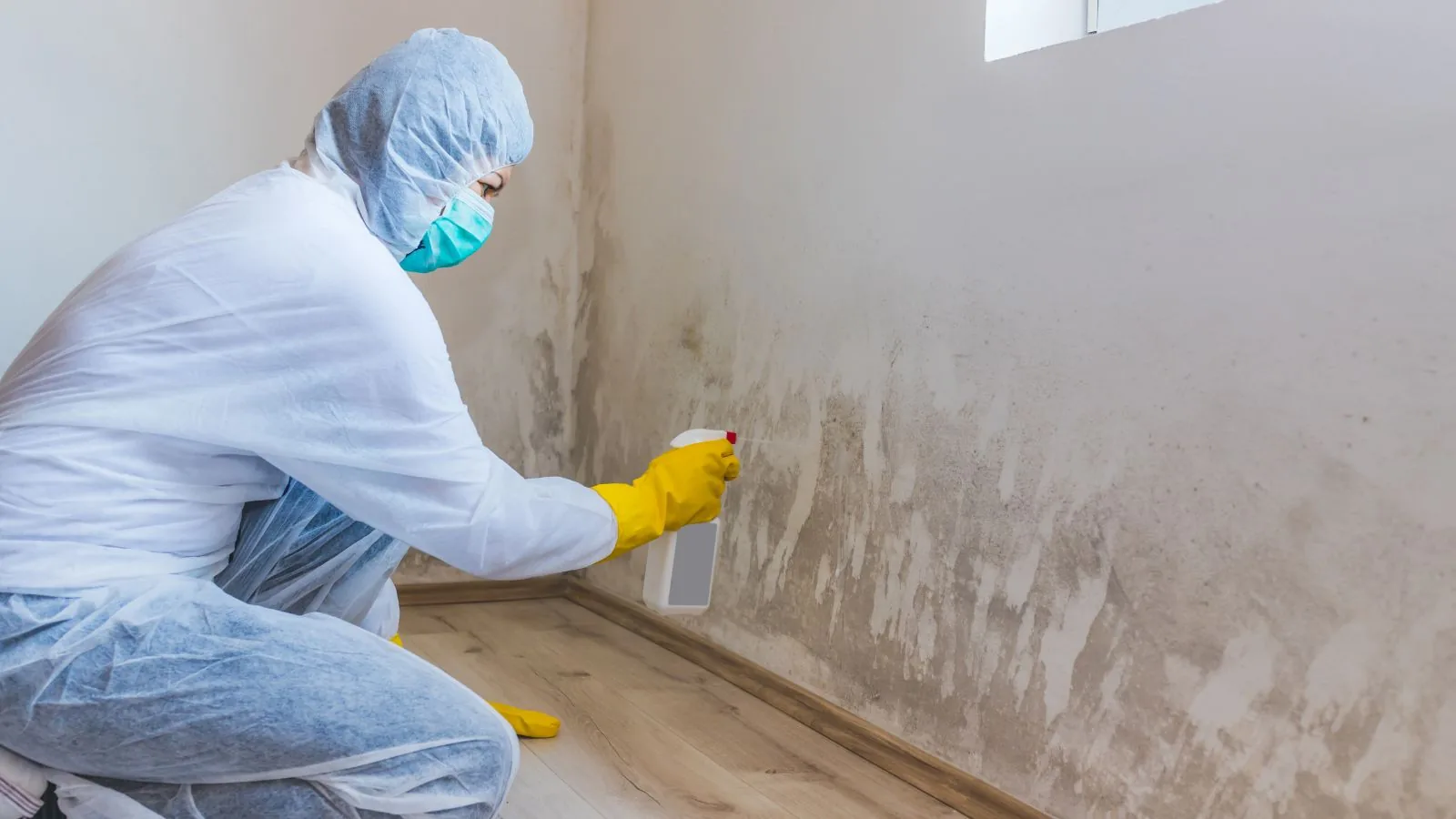
Black mold is the name people give to dark green or black growth on walls, ceilings and wood, and it has a frightening reputation. The honest answer to how dangerous it is falls between panic and shrugging it off. Mold is a moisture problem first, and the health risk depends on how much is present, how long it has been growing and who is breathing the air.
This guide explains what the Massachusetts Department of Public Health says, what the risk depends on and when to call a professional. If you already see growth after a leak, the mold remediation page explains how containment and drying work.
What black mold can do to your health
The Massachusetts Department of Public Health lists the common effects of mold exposure as nasal congestion, wheezing, red and watery eyes and itchy skin. People with allergies or asthma may react more strongly, with breathing problems. For most healthy adults the effects are irritation, not a medical emergency, and they ease once the exposure ends.
That does not mean the growth can stay. Mold that is visible means moisture is present, and moisture damages wood, drywall and insulation whatever color the growth is. Anyone with asthma, a weak immune system or breathing trouble should talk to a doctor and keep away from the affected area.
Is black mold worse than other colors?
Color is a poor guide. Mold growth can be black, green, white, gray or orange depending on the species and the material it grows on, and several different molds look black. You cannot tell the species by looking, and the Department of Public Health notes there are no state or federal standards for what counts as a safe or unsafe level of mold in a home.
What matters in practice is the same for every color. Find the water, dry the area and remove growth on porous material that cannot be cleaned. Treat every dark patch as a sign of moisture rather than trying to identify the type by eye.
How to judge the risk in your own house
| What you see | What it usually means | What to do |
|---|---|---|
| A small spot on a tile or painted surface in a damp bathroom | Surface growth from steam and poor ventilation | Clean it after the moisture is controlled and improve ventilation |
| A patch larger than about 10 square feet | A larger moisture problem | Professional help is recommended by the state fact sheet |
| Growth on drywall, ceiling tile or carpet | Porous material that holds growth deep | Removal and replacement, not scrubbing |
| A musty smell with no visible growth | Hidden moisture behind a wall or under a floor | Moisture readings and a look behind the surface |
The state fact sheet for owners recommends a professional mold remediator when the affected area is greater than 10 square feet or when occupants are especially sensitive to mold. It also recommends one when the mold results from a plumbing leak, a faulty HVAC system, a flood or a sewage leak. Those are the situations in most water damage calls.
What not to do
- Do not scrub dry mold or sand it, which sends spores into the air.
- Do not paint over growth, which hides the problem and does not stop it.
- Do not run a fan across the area and spread spores to other rooms.
- Do not mix bleach with other cleaners, which can release dangerous fumes.
- Do not wait for a test result before fixing a leak. Fix the water first.
When to call for help
Call when growth follows a leak or flood, when the area is large, when anyone in the house has breathing problems or when a musty smell keeps returning. The dispatcher will ask where the water came from, how big the area is and whether the material is wet now. For hidden moisture, structural drying explains how readings find water behind surfaces.
A crew sets up containment, removes the materials that cannot be saved and dries what remains. The restoration work removes the growth and the moisture. It does not promise the mold never returns, since that depends on keeping the house dry.
Wellesley note: older houses and the moisture they keep
The Massachusetts Historical Commission's survey describes large Italianate, Second Empire, Queen Anne and Colonial Revival houses around Cliff Road and Wellesley Hills, many built between the 1850s and 1915. Houses of that age often have attics, plaster walls, slate or wood-shingle roofs and old window openings, all places where a slow leak can wet a cavity for months before a stain shows.
If you own one, check the attic after heavy rain and look at the ceiling beneath chimneys and roof valleys. A small, early repair costs far less than rebuilding a wall with growth inside it.
Neighbors in Dover and Wayland often have wells and septic systems, so mention your water source when you call about growth after a leak.
Frequently asked questions
Can black mold make me sick?
It can cause irritation such as congestion, wheezing, red eyes and itchy skin, and people with allergies or asthma may react more strongly. Talk to a doctor if anyone has breathing problems.
Do I need a test to know if it is dangerous?
The Department of Public Health does not recommend routine mold testing, and there are no standards for a safe level. Visible growth and a musty smell are reliable signs that moisture needs to be fixed.
Can I clean a small patch myself?
Small surface growth on a hard surface can be cleaned once the moisture is controlled. Anything on porous material, or larger than about 10 square feet, calls for professional help.
Which older Wellesley houses are most likely to hide moisture?
Houses with attics, plaster walls and old roofs, such as those around Cliff Road, can hide slow leaks inside cavities. Check ceilings under chimneys and valleys after heavy rain.
Water still spreading? Call the 24/7 line
Describe what you see and what has been shut off. Scope and price are explained before work starts.