
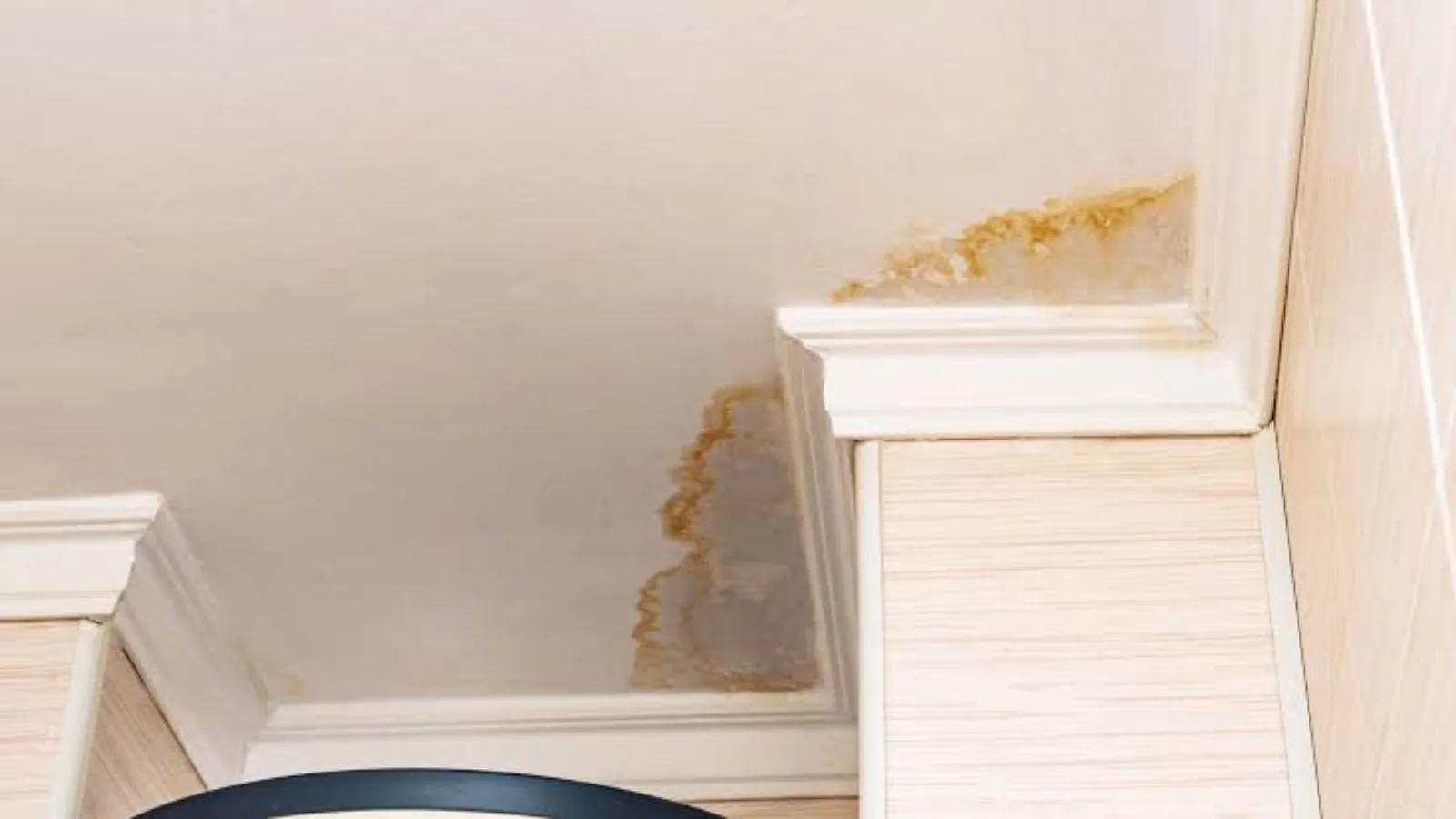
A brown stain on a ceiling raises one question right away. Is the leak still happening, or is this old damage that was never cleaned up? The answer decides whether you call a plumber, a roofer or a restoration crew. This guide gives practical ways to tell old from new and when to ask for help.
Signs the water damage is new or active
- The stain is damp, cool or soft to the touch.
- The stain is spreading or growing after rain or after someone uses a fixture.
- Paint is bubbling or peeling, and the drywall feels soft.
- There is dripping, or a musty odor that is getting stronger.
- The edges of the stain are fuzzy, with a darker ring that looks fresh.
An active leak is an emergency in the sense that every day adds damage. Stop the water if you can reach the source, and photograph the stain before anything changes.
Signs the water damage is old
- The stain is dry, hard and stable, with no change after rain.
- Rings or tide marks show repeated wetting and drying over time.
- The surface is brittle, discolored or stained yellow or brown with no softness.
- No odor, no dampness and no change on a moisture meter.
Old does not mean harmless. A dry stain may hide damaged insulation or framing above, and the leak that caused it may have been repaired badly or not at all.
How a moisture meter settles the question
| Finding | What it suggests | Next step |
|---|---|---|
| Stain with high moisture reading | Active leak or recent wetting | Find and stop the source, then dry |
| Stain with a normal reading | Old damage, now dry | Check for hidden damage and repair the finish |
| Normal reading that rises after rain | Intermittent leak | Look at the roof, gutters and flashing |
| High reading with no visible stain | Hidden moisture | Open the wall or ceiling to find the source |
A moisture meter and a thermal camera show wetter areas behind a surface, which a visual check cannot. Structural drying explains how readings guide the work.
What to do with each case
If the damage is new, stop the source, dry the area and call early. Ceiling water damage repair explains what a wet ceiling needs and why you should stay clear of a sagging area. If the damage is old and dry, repair the cause if it has not been repaired and replace damaged finishes. Document everything with photographs and dates, because insurers and buyers may ask.
Stains by color and edge
The look of a stain gives clues, though none is certain. Fresh stains are often light tan or gray with soft edges. Repeated wetting builds darker brown rings with sharper edges, because minerals and dirt gather at the border as the water dries. Several rings show repeated leaks, which usually mean the source was never fixed.
Black spots in or beside a stain suggest growth and long-term moisture, which is a reason to have the area checked. Do not poke or scrub it, and keep people with breathing problems away.
Questions to ask about an old stain
- Was the source repaired, and is there an invoice?
- Does the stain change after rain or after using a fixture?
- Is there a musty smell in the room or the room above?
- Do readings from a moisture meter confirm it is dry?
- Has the area been repainted, and if so, was the stain blocked first?
Why timing matters for the repair
New damage can often be dried in place, and the earlier you act, the more of the material you save. Old damage usually needs repair of the finish, and sometimes of what lies behind it. The difference can be the gap between a few days of drying and a rebuilt ceiling.
That is a reason to treat any damp stain as urgent until readings say otherwise.
The short version
- Dampness and spreading point to an active leak.
- A dry, stable stain with rings suggests old damage and repeated wetting.
- A moisture meter settles the question better than a look.
- Old damage can hide problems above or behind it.
Wellesley note: reading the age of a house before you read the stain
The Massachusetts Historical Commission's survey describes Wellesley Center's growth from around the 1830s, with Victorian brick commercial blocks and later Colonial Revival buildings, and large suburban houses built from the late 1800s into the 1930s. A house that has stood for a century or more has had many chances for roof, flashing and plumbing repairs, some good and some not.
If you are buying or inspecting an older Wellesley house, ask where past leaks were and who repaired them. A stain over a repaired area can be old news, while a stain in a new place needs a reading and a look above it.
Homes in Natick and Dover range from older village houses to large newer ones, and the checks above work in all of them.
Frequently asked questions
Can a dry ceiling stain still be a problem?
Yes. The stain may be old, but insulation and framing above it can have been damaged, and the source may not have been fixed.
Will the stain come back if I paint over it?
If the water source is still active, yes. Fix the source, confirm the area is dry and then repaint with a stain-blocking primer if needed.
Does a stain that appears only after rain mean a roof leak?
It points to one, or to flashing or a gutter problem. A roofer finds the opening, and the restoration crew dries what got wet.
What should a buyer of an older Wellesley home ask about stains?
Ask where leaks occurred, when they were repaired and who did the work, and ask for a moisture reading of any stained area.
Water still spreading? Call the 24/7 line
Describe what you see and what has been shut off. Scope and price are explained before work starts.