
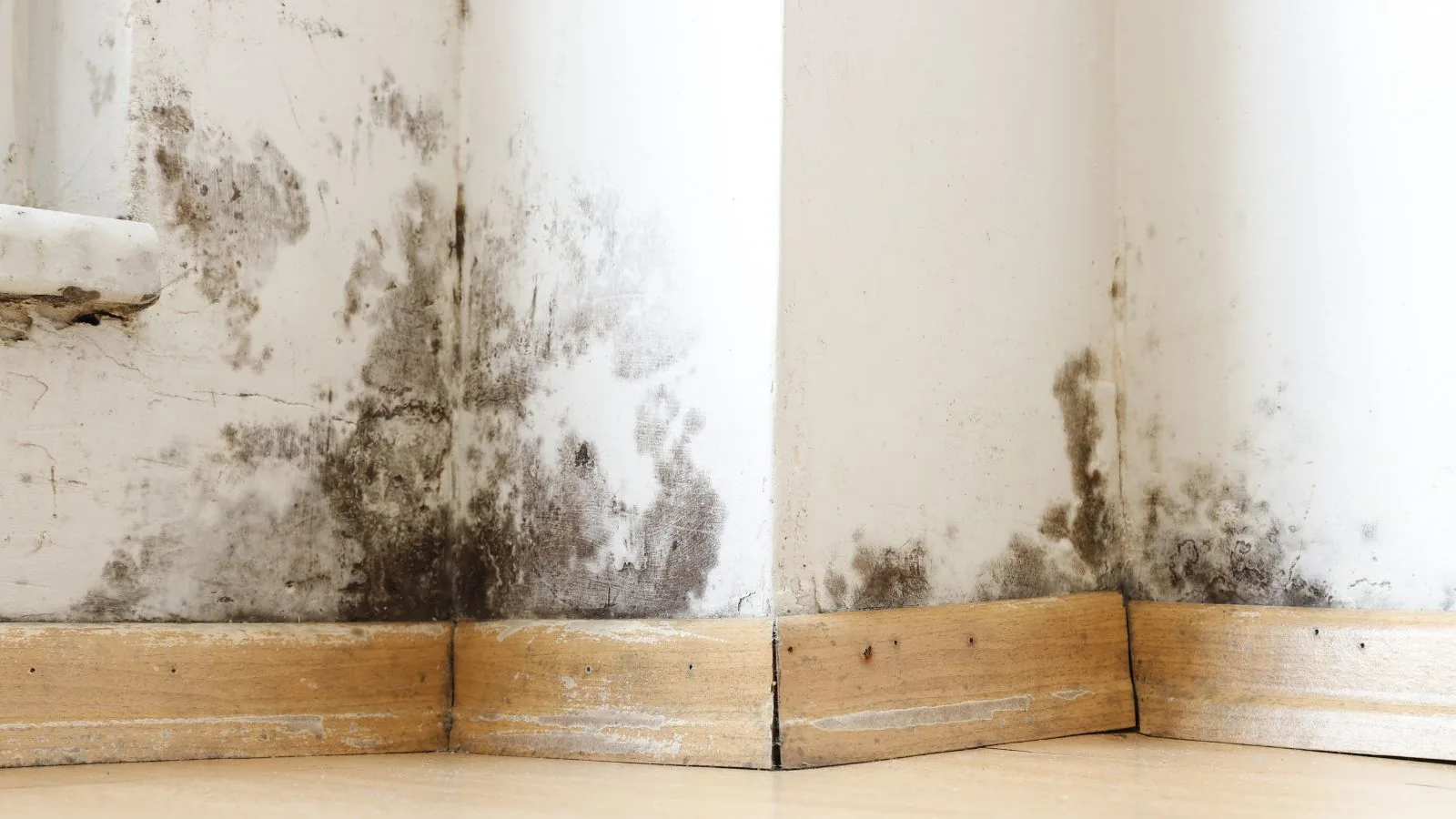
Mold on a wall usually shows up as spots, a fuzzy patch or a stain that returns after cleaning. It appears where a surface stays damp, and the pattern often points to the source. This guide explains what mold on walls means, which causes are common and what to do before and after you call for help.
If the wall was wet from a leak, the wall and drywall water damage repair page explains when a wall is dried in place and when it is cut out.
Why mold grows on a wall
Mold needs a food source, moisture and time. A painted drywall surface offers paper and starch, and the only thing missing is water. A leak, condensation, high humidity or a cold surface that collects moisture can supply it. The Massachusetts Department of Public Health advises drying wet areas within 24 to 48 hours to prevent growth, and says indoor humidity above 70 percent can also support mold.
So the question is never only how to remove the mold. It is where the water is coming from, because without that answer the growth returns.
Reading the pattern
| Where the growth is | Likely moisture source | First check |
|---|---|---|
| Around a window | Condensation on cold glass or a leaking frame | Look for water on the sill and stains under the trim |
| In an exterior corner | A cold wall surface or a gap in insulation | Feel the wall for cold and damp, check outside gutters |
| Below a bathroom or kitchen | Plumbing leak or humidity | Check the wall under the fixture and the ceiling below |
| Behind furniture on an outside wall | Poor air movement against a cold wall | Pull the piece away and check for dampness |
| On a ceiling or upper wall | Roof or attic moisture | Check the attic and the roof above |
What to do first
- Find the moisture. Look for leaks, condensation, gutter overflow and damp insulation.
- Stop the source, or dry the area if the cause was a one-time leak.
- Photograph the wall, since insurers and landlords ask for it.
- Decide on size. A small surface patch can be cleaned, while anything on soft, crumbling or large areas needs removal.
- Call for help if the area is larger than about 10 square feet or follows a leak or flood.
Cleaning comes after the moisture is fixed, not before. A wall that is cleaned while still damp grows mold again within days.
When the wall has to be opened
If drywall is soft, crumbles, bubbles or has black growth on the back, it is cut out and replaced. Insulation inside a wet wall is usually removed because it holds water against the framing. The crew cuts a clean line above the wet area, dries the studs and checks them for growth before anything new goes up.
Where the cause was a plumbing leak, a plumber repairs the line first. Mold remediation covers the containment that keeps spores from spreading while the wall is opened.
Cleaning a small patch safely
If the growth is small, on a hard surface and the moisture is fixed, you can clean it. Wear gloves, eye protection and a mask. Use detergent and water, wipe rather than scrub dry, and bag the cloths. Let the area dry fully and check it again in a few days. Do not mix cleaning products, and keep the room ventilated.
If the paint peels, the drywall is soft or the patch returns, stop cleaning. That is a sign the material is holding water, and the safer course is to open the wall.
Why the same spot keeps coming back
Recurring growth in the same spot almost always means the moisture source was never fixed or the surface is still cold and damp. Check for slow plumbing leaks, gaps around windows, missing insulation and gutters that overflow near that wall. Move furniture away from exterior walls so air can circulate.
If the patch keeps returning after you have cleaned and dried it, bring in someone with a moisture meter. They can tell you whether water is inside the wall.
The short version
- Mold on a wall points to moisture, so find the water first.
- Read the pattern, since a window, corner or ceiling each suggests a different source.
- Small surface patches can be cleaned, but soft or large areas need removal.
- Do not paint over growth.
Wellesley note: heavy rain and damp walls
The Town of Wellesley's climate plan, prepared with the state's Municipal Vulnerability Preparedness program, names flooding and intense storms among its primary hazards. It cites a more than 70 percent rise in heavy precipitation events across the Northeast between 1958 and 2010 and notes that a single intense downpour can cause serious flooding.
For a homeowner, heavier rain means more water on roofs, in gutters and against foundation walls. Clean gutters, check that downspouts discharge away from the house and look at exterior corners after storms, since that is where damp walls often begin.
The same moisture rules apply in Natick and Weston, where brooks and heavy rain push water against exterior walls.
Frequently asked questions
Is a musty wall always mold?
Not always, but a musty smell is a reliable sign of moisture and often of growth behind the surface. Moisture readings show whether the wall is wet.
Can I paint over mold on a wall?
No. Paint hides the stain but not the moisture or the growth, and the problem usually returns and can peel the paint.
Why does mold come back after I clean it?
The moisture is still there. Cleaning removes the growth for a while, and fixing the source is what keeps it away.
Which Wellesley walls should I check after a storm?
Check exterior corners, walls under roof valleys and the base of walls near downspouts. Heavy downpours push water to those spots first.
Water still spreading? Call the 24/7 line
Describe what you see and what has been shut off. Scope and price are explained before work starts.