
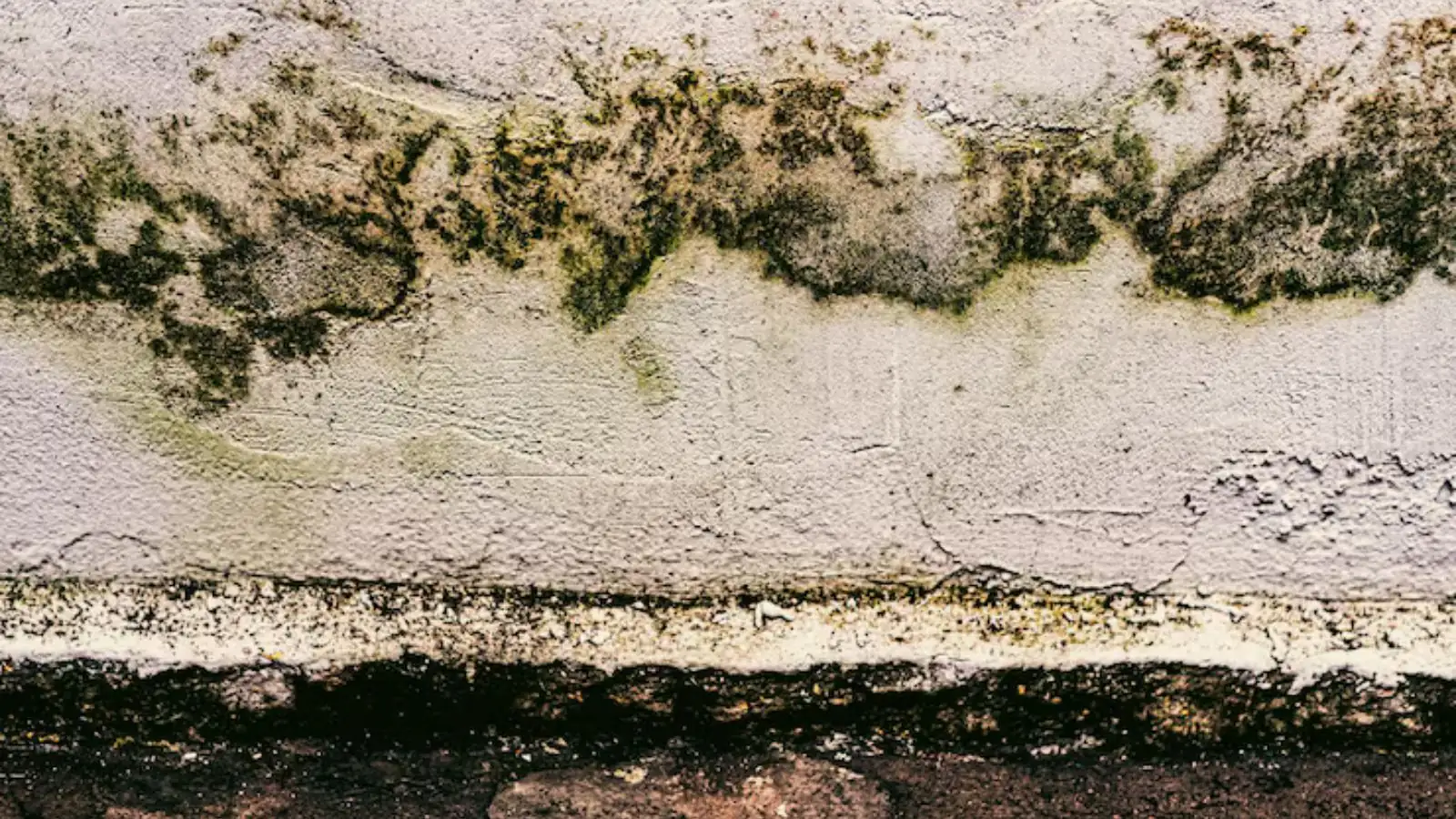
People use mold and mildew almost interchangeably, and in everyday life that is fine. Both are fungi that need moisture. The difference helps you judge how serious a patch is and how to deal with it. This guide explains how to tell them apart in a Wellesley home and why the moisture problem matters more than the label.
What mildew is
Mildew is a surface growth, often flat, powdery or downy, and usually white, gray or yellowish at first. It tends to appear on bathroom tile, shower curtains, window sills and damp fabrics. It sits on the surface and wipes off with a cleaner, though it comes back if the humidity stays high.
Mildew is a warning. It tells you a surface stays damp and the room needs more ventilation, a leak fixed or a spot dried.
What mold is
Mold is a broader term for fungal growth, and it can be fuzzy, slimy or spotty in black, green, blue, white or orange. It grows into porous materials such as drywall, wood, insulation and carpet, where wiping the surface does not reach the roots. The Massachusetts Department of Public Health notes that mold can cause nasal congestion, wheezing, red eyes and itchy skin, and that people with allergies or asthma may react more strongly.
Mold on porous material is usually a sign that the material was wet for longer than a day or two.
Telling them apart at a glance
| Feature | Mildew | Mold |
|---|---|---|
| Texture | Flat, powdery or downy | Fuzzy, slimy or raised |
| Color | White, gray or yellow | Black, green, blue, white or orange |
| Where | Surfaces such as tile, sills and fabric | Inside or under porous materials |
| Cleaning | Usually wipes off | May need removal of the material |
| What it means | High humidity or a damp surface | A longer-lasting moisture problem |
You cannot be certain of the species by eye, and for most homeowners it does not matter. The action is the same. Control the moisture, clean what can be cleaned and remove what cannot.
What to do about each
- Find the moisture. Check for leaks, condensation and humidity.
- Dry the area and improve airflow or ventilation.
- Clean small surface growth on hard surfaces once the area is dry.
- Remove and replace porous materials that have growth in them.
- Call for help if growth covers more than about 10 square feet, follows a leak or flood or returns after cleaning.
If growth follows a water event, mold remediation explains containment and removal. If you are still working out where the water is coming from, structural drying explains how readings find hidden moisture.
Common places each one shows up
| Place | What you usually find | Why |
|---|---|---|
| Shower tile and grout | Mildew, sometimes pink or black film | Steam and standing water on surfaces |
| Window sills and frames | Mildew or light mold | Condensation on cold glass |
| Basement walls and corners | Mold on paint, wood or stored boxes | Damp air and cool surfaces |
| Behind a toilet or under a sink | Mold on board or cabinet bases | Slow leaks and trapped moisture |
| Attic roof deck | Mold on wood or insulation | Warm air condensing on cold sheathing |
A simple wipe test and its limits
A common homeowner test is to wipe a small spot with a damp cloth. If it comes off easily and leaves clean paint behind, it was probably surface mildew or dirt. If it smears, leaves a stain or returns within days, the growth may be in the material. The test is rough, and it does not replace a look at the moisture source.
Wear gloves and a mask for any cleaning, avoid dry scrubbing and stop if the patch is large or on soft material. A big or recurring patch calls for professional help, not a harder scrub.
Why identification matters less than action
Species identification takes laboratory work, and for a homeowner it rarely changes what has to be done. The decisions are the same either way. Fix the moisture, dry the area, clean what can be cleaned and remove what cannot. A patch that is large, spreading or on soft material calls for removal whatever it is called.
Spend your effort on the water, not on naming the growth.
The short version
- Mildew sits on the surface, and mold can grow into porous material.
- Both are signs of moisture, and the fix for each starts with the water.
- Clean small surface growth after the area is dry.
- Call for help with large, hidden or recurring patches.
Wellesley note: smaller postwar houses and the humidity they trap
A Wellesley-Weston Magazine profile of The Fells says the neighborhood was largely undeveloped until World War II and that homes there are generally smaller and built closer together than elsewhere in town. In a compact house, a single bathroom or kitchen can account for much of the moisture in the air.
Run bathroom fans during and after showers, use the kitchen exhaust while cooking and watch the corners of exterior walls, where cool surfaces collect condensation. Those small habits keep mildew from turning into mold.
The same checks apply in Natick and Weston.
Frequently asked questions
Is mildew dangerous?
It is usually a surface growth that irritates some people, but it is a sign of excess moisture that should be fixed.
Can I kill mold with bleach?
Bleach does not reach growth inside porous materials and should never be mixed with other cleaners. Removing the material and fixing the moisture is the dependable approach.
How big is too big to clean myself?
The state fact sheet recommends a professional for areas larger than about 10 square feet, and for any mold that follows a plumbing leak, a flood or sewage.
Why does my Fells-style compact house get damp in winter?
Closely spaced rooms and one set of fixtures concentrate moisture. Ventilate bathrooms and kitchens and check cold exterior walls for condensation.
Water still spreading? Call the 24/7 line
Describe what you see and what has been shut off. Scope and price are explained before work starts.