
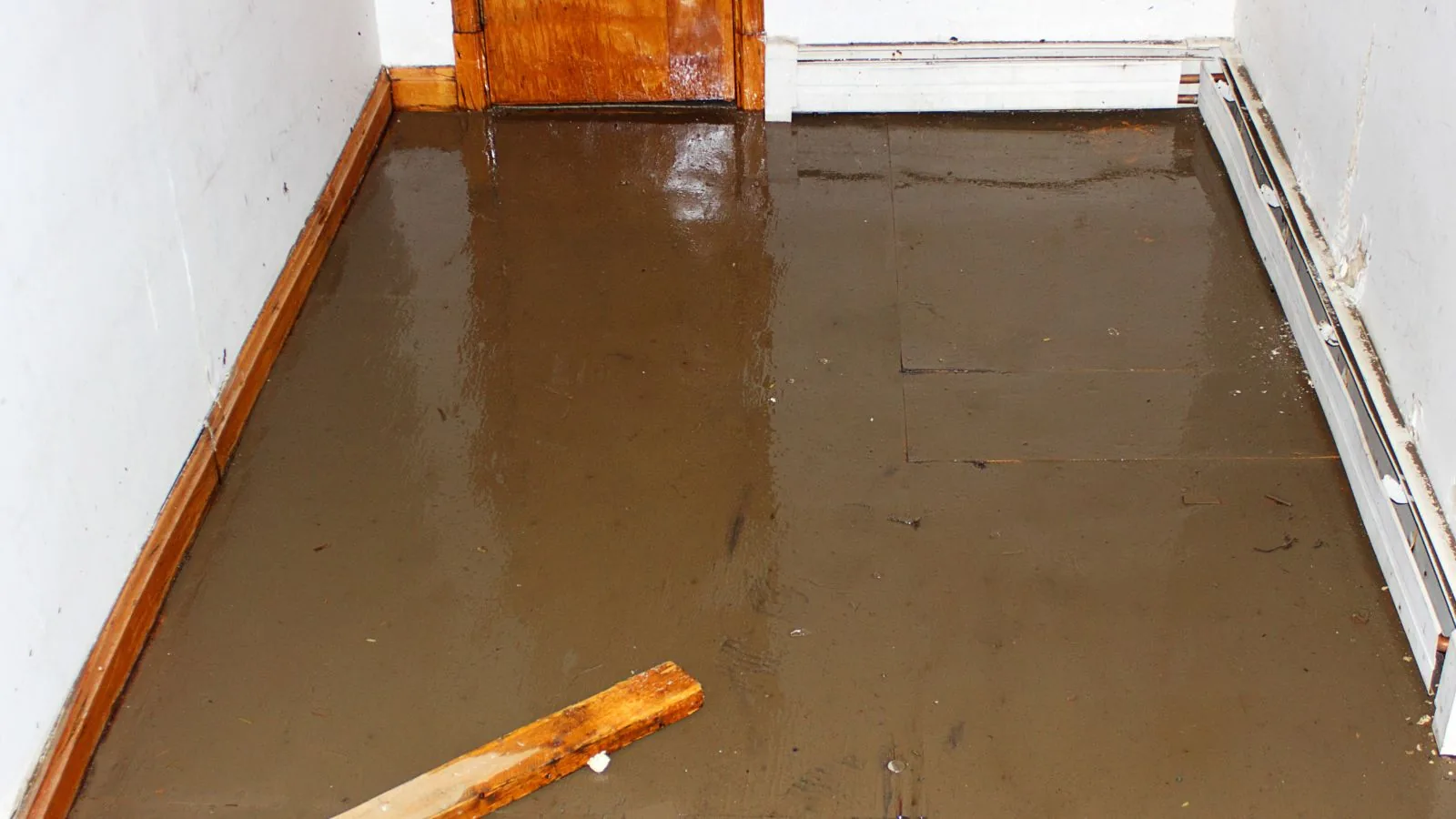
When a restoration crew asks where the water came from, the answer decides the category, and the category decides the cleanup. The ANSI/IICRC S500 standard for water damage restoration sorts water into three categories based on how contaminated it is at the source and how it changes over time. This guide explains each category in plain terms with Wellesley examples.
The three categories
| Category | Source of the water | Typical examples | What usually happens |
|---|---|---|---|
| Category 1 | A clean source | Broken supply line, overflowing sink with clean water | Extract and dry, many materials can be saved |
| Category 2 | Used or gray water with some contamination | Dishwasher or washing machine discharge, toilet overflow with urine only | Extract, clean and dry, porous materials are often removed |
| Category 3 | Grossly contaminated water | Sewage, river or floodwater, water from a drain backup | Remove porous materials, clean and sanitize, then dry |
The categories are about contamination, not about how much water there is. A thin film of sewage is Category 3, and a flooded floor from a clean supply line starts as Category 1.
Water gets worse with time
A clean leak that sits can change categories. Category 1 water left in carpet for a day or two picks up bacteria from the materials and can move toward Category 2. That is another reason the Massachusetts Department of Public Health advises drying wet materials within 24 to 48 hours.
It is also why the dispatcher asks how long the water has been there. A fresh supply line leak and a leak that ran for three days are handled differently even when the source is the same.
What each category means for your belongings
- Category 1: carpet, pad and drywall can often be dried in place if the response is quick.
- Category 2: carpet pad is usually discarded and carpet may be treated or replaced depending on time and contact.
- Category 3: carpet, pad, insulation and drywall that were wet are usually removed. Hard surfaces and framing are cleaned and treated before drying.
Safety follows the category too. Category 3 water carries a health risk, and people and pets should stay out of it. Sewage backup cleanup explains the protective steps, and flood damage cleanup explains why outside water is treated as contaminated.
What you can tell the dispatcher
- Where the water came from, in plain words.
- How long it has been there.
- What it has touched, such as carpet, drywall or stored boxes.
- Whether anyone has noticed a smell or discoloration.
- Whether electricity or a basement is involved.
You do not need to know the category. The crew decides it from the source and the conditions and tells you what that means for the scope.
How categories relate to classes
You may also hear about classes of water damage, numbered 1 through 4. The categories describe the water, and the classes describe how much moisture the materials absorbed and how fast they will release it. Class 1 is the least, with little absorbed, and Class 4 is deep saturation in dense materials such as hardwood or concrete.
The two work together. A Category 1 leak into dense hardwood may be a high class that needs careful drying, while a Category 3 sewage backup on a small tile floor may be a low class that needs strong cleaning and little drying.
Why this matters to you
Knowing the terms helps you follow the scope. If a crew says it plans to remove carpet because of Category 3 water, you know the reason. If it says it will dry hardwood slowly because of a high class, you know that is about the material, not the cleanliness of the water.
What the category does not tell you
The category does not tell you how much damage there is or how much it will cost. A small amount of Category 3 water can cost less to clean than a large amount of Category 1, because the work depends on area, materials and drying as well as contamination. It also does not tell you whether mold will follow, since that depends on how quickly things are dried.
Treat the category as one input to the scope, not the whole story.
The short version
- The category describes contamination, and the standard behind it is ANSI/IICRC S500.
- Clean water can worsen over time, which is why speed matters.
- Category 3 water calls for protective gear and removal of porous materials.
- Tell the crew where the water came from and how long it sat.
Wellesley note: wipes, drains and the sewer line
The Wellesley Department of Public Works Water and Sewer Division maintains the town sewer system and says that wipes and paper towels clog sewers and cause backups and overflows. A backup is the clearest Category 3 example, since the water that returns through a drain has come from the sewer.
The Town of Wellesley's flood page also describes floodplain districts along the Charles River and Fuller Brook. Water that enters from the river or the ground is Category 3 in the same way, which is why the cleanup of a basement flood is not the same as the cleanup of a burst pipe.
In Wayland and Weston, where brooks and rivers can carry flood water into homes, expect Category 3 handling.
Frequently asked questions
Is water from a washing machine hose Category 1?
Water from a supply hose is usually Category 1, while water discharged from the machine drain is typically Category 2. The crew decides from the source.
Can Category 1 water become Category 3?
It can become more contaminated over time, mostly by moving from Category 1 toward Category 2. Time and the materials it touches matter.
Who decides the category?
The restoration crew, based on the source and the conditions, following the ANSI/IICRC S500 standard.
Why does a drain backup in Wellesley count as the most serious category?
Because the water returning through a drain has come from the sewer. The town's DPW notes that wipes and paper towels clog sewers and cause backups.
Water still spreading? Call the 24/7 line
Describe what you see and what has been shut off. Scope and price are explained before work starts.