
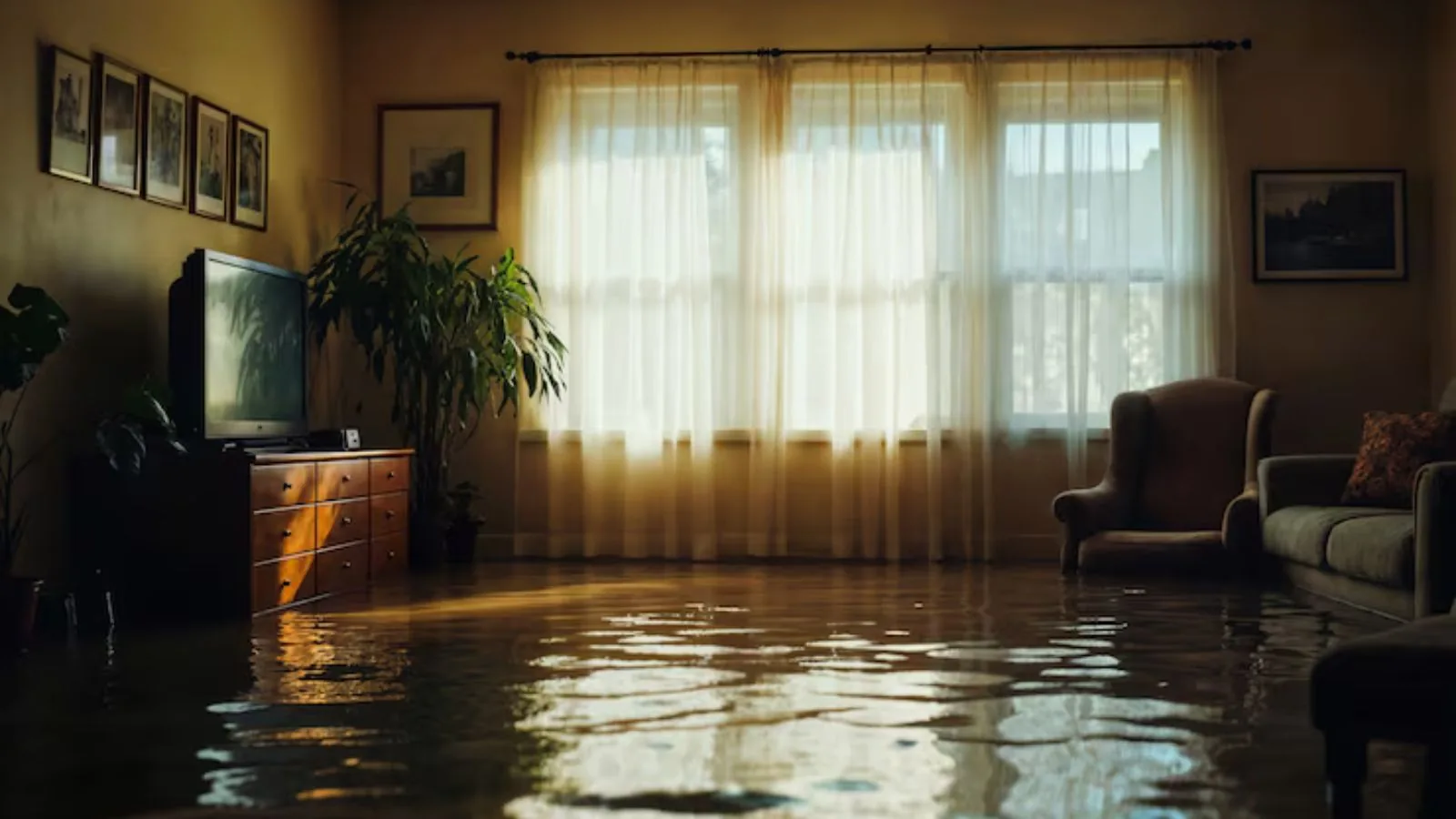
Not every wet spot needs a crew. A glass of water on a tile floor is a mop job, and a soaked carpet or a wet wall is not. This guide helps you tell the difference, explains what you can safely handle and lists the signs that you need measured drying.
What you can usually handle yourself
- A small spill of clean water on a hard, sealed floor.
- Water from a clean source that touched only a small area and has been wiped up within a couple of hours.
- Damp towels, rugs and small items, which can be washed and dried.
- A wet bathroom after a shower, with the fan running and surfaces wiped.
Use a mop, towels and a fan, and check the next day for dampness, odor or staining. If the area is still damp or smells musty, treat it as a larger problem.
What calls for a professional
| Situation | Why it needs more than a fan | What the crew does |
|---|---|---|
| Water reached carpet and pad | Pad holds water and dries slowly | Extract, lift, dry or replace the pad |
| Water went into a wall or under flooring | Moisture hides behind surfaces | Moisture mapping and cavity or subfloor drying |
| Sewage, flood or drain water | Contaminated and unsafe | Protective gear, removal and sanitizing |
| Water on or near electrical outlets or the panel | Shock hazard | Call the utility or 911 first |
| Standing water more than a thin film | Needs pumps and extraction | Extract with proper equipment |
| Water sat longer than a day or two | Mold risk rises | Assess, dry and check for growth |
Household fans and small dehumidifiers move far less air and remove far less water than the equipment a crew uses. They do not tell you when a structure is dry, either. Only readings do.
What you can do while you wait
- Stop the source of water if it is safe to do so.
- Move furniture, rugs and electronics off wet floors.
- Open doors and windows if the weather allows and run a fan across the surface.
- Remove wet items that cannot be saved and set them aside for the adjuster.
- Photograph the damage and the source.
Do not use a household vacuum on standing water, and do not walk through water that may be near electricity. Water extraction explains what proper equipment does.
How to know it is dry
A surface that feels dry may not be. Wood, drywall and concrete hold water below the surface and release it slowly. A moisture meter gives a reading for each material, and a dry standard for that material tells you when drying is done. If you did the drying yourself and a musty smell returns, the readings were never taken. Mold remediation explains what happens when moisture stays.
Mistakes that make drying harder
- Using a space heater near wet drywall or carpet, which can warp materials and create a fire risk.
- Closing doors and windows so moist air has nowhere to go.
- Running a small dehumidifier in a large wet room and expecting a result.
- Placing a fan so it blows wet air into a dry room.
- Stopping equipment as soon as the surface feels dry.
Moisture moves toward dry air, and it moves into other rooms if you let it. A drying plan keeps air moving across wet surfaces and takes the moisture out of the house with dehumidifiers, not just around it.
A simple at-home routine for small spills
- Remove the water with towels, a mop or a wet vacuum if the area is safe.
- Lift or prop up rugs and furniture so air reaches the floor.
- Run a fan across the surface and a dehumidifier in the room.
- Check after a day for dampness, odor or staining, and look under rugs.
- Call if the area is still damp or you smell something musty.
Knowing when to stop
Set a limit before you start. If the area is still damp after a day of fans and a dehumidifier, or if you notice a musty odor, stop and call. Continuing to run equipment on a structure that is not drying wastes time that mold would like to use.
A short call early costs far less than a rebuild after a week of guessing.
The short version
- Small spills of clean water on hard floors are a do-it-yourself job.
- Water in walls, pad or subfloors needs readings and equipment.
- Never dry contaminated water yourself.
- Surface dryness is not the same as a dry structure.
Wellesley note: river water is not a do-it-yourself job
The Town of Wellesley's flood page describes floodplain districts along the Charles River and Fuller Brook. Water that comes from a river or from the ground is treated as contaminated, which puts it outside the category of things to dry yourself.
The Wayland Museum and Historical Society explains that the Sudbury River's almost flat gradient causes flooding in Wayland, and its photographs show how long high water can linger. If river or groundwater has entered your home, whether in Wellesley or in a nearby town, stay out of it and call.
When river or groundwater enters a home in Wayland or Weston, stay out of it and call.
Frequently asked questions
Can I use a wet-dry vacuum on a flooded floor?
Not on standing water that may be near electricity or contaminated. For shallow clean water on a hard floor, a wet vacuum can help if it is safe to plug in.
How long should I run fans?
Until readings show the materials are dry. Running fans for a day and stopping often leaves moisture in walls and subfloors.
Can I dry carpet without removing the pad?
Sometimes after clean water if it is caught early, but pad usually holds water and is replaced. The crew decides from readings.
Why is river water treated differently?
It carries soil and can carry waste, which makes it contaminated. The crew removes porous materials it reached and cleans the rest.
Water still spreading? Call the 24/7 line
Describe what you see and what has been shut off. Scope and price are explained before work starts.